
Reviewed · COMMUNIST HERITAGE TOURS
Communist Walking Tour of Sofia
Sofia’s communist past is not confined to a museum. It is written into the city’s grand government buildings, missing statues, battered walls, and monuments that still cause arguments. This three-hour walking tour connects those clues, from the Palace of Justice to the National Palace of Culture, while explaining how communism shaped ordinary Bulgarian life.
I like two things right away. First, the tour links big political events to places you can actually see. Second, guides such as Niki, Nikola, Vasko, Martin, and Stefan use family stories and everyday examples instead of reciting dates. The main consideration is the walking: you cover a fair stretch of central Sofia, and a 4 pm start can mean darkness during the final hour in winter.
Key points to know
- Personal Cold War stories: Guides explain ideology and daily life through family memories and practical examples.
- A useful city walk: The route joins central sights, including the Presidency, Largo, City Garden, and NDK.
- The Soviet Army Monument: See Sofia’s most disputed communist-era monument and its changing graffiti.
- A balanced history lesson: Expect discussion of both the appeal and the costs of communism in Bulgaria.
- About three hours on foot: The route includes breaks, but it is not a short monument stroll.
- Small-group format: Groups are limited to 25 people, with English-language guiding and a central start.
Seeing Sofia through its communist past
This tour works best because it treats Sofia as an open-air history book. You are not simply shown a statue and told its name. You learn why it was built, what it represented, how people reacted to it, and what happened after the communist period ended.
The political story begins with the arrival of the Soviet Army in Bulgaria and moves through the power of the Bulgarian Communist Party, the symbols placed around the capital, opposition to the regime, and the collapse of the system. You also hear about daily life, not only leaders and buildings. That balance matters, since a tour focused only on monuments can make communism feel distant and abstract.
The guides take different approaches, but the strongest thread is personal storytelling. Niki has been praised for explaining difficult ideas with humor and vivid details. Nikola and Vasko use family experience to connect public events with private life. Martin brings a strong personal connection to Sofia, while Stefan is known for making the past easy to follow.
You should expect a serious subject, but not a dry lecture. Questions are welcome, and the guides make room for discussion. The tone is generally balanced, with attention to both the promises of the system and the restrictions, fear, and political control that came with it.
More Walking Tours in Sofia
- Sofia Highlights 2 Hour Sightseeing Walking Tour
★ 5.0 · 442 reviews - Guided Walking Tour of Sofia
★ 5.0 · 143 reviews - Private city walking tour of Sofia
★ 5.0 · 141 reviews
Starting at Sofia’s Palace of Justice
The meeting point is outside Sofia City Court, the Palace of Justice, at 2 Vitosha Boulevard. This is a central location and easy to connect with public transport. The tour begins at 4 pm, so arrive early enough to locate the correct side of the building and meet the group without a rushed start.
The opening section introduces the tour’s political setting. You begin in a part of Sofia that feels busy and modern, then start looking at it through the lens of the postwar regime. The nearby 365 Association Sofia Tours location is also listed as part of the opening point, so check your booking confirmation carefully for the precise meeting instructions.
The central location is convenient, but the start time deserves thought. In warmer months, late afternoon can be pleasant. In winter, daylight fades early, and the final monuments may be harder to see. One person missed part of the tour after following incorrect directions to the endpoint, so I would rely on the confirmation details and verify that you are heading to the Palace of Justice, not NDK.
St. Petka and religion under communism
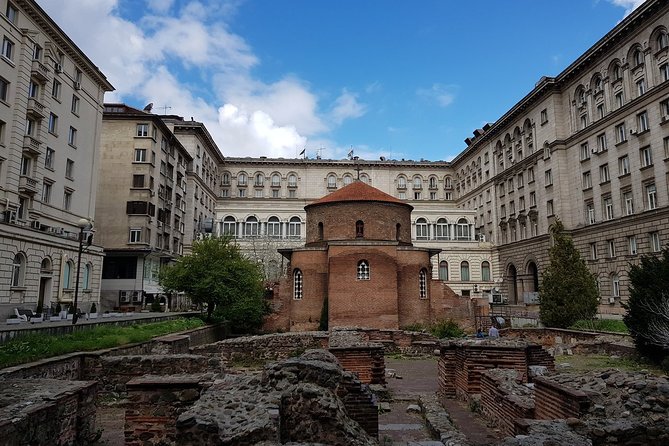
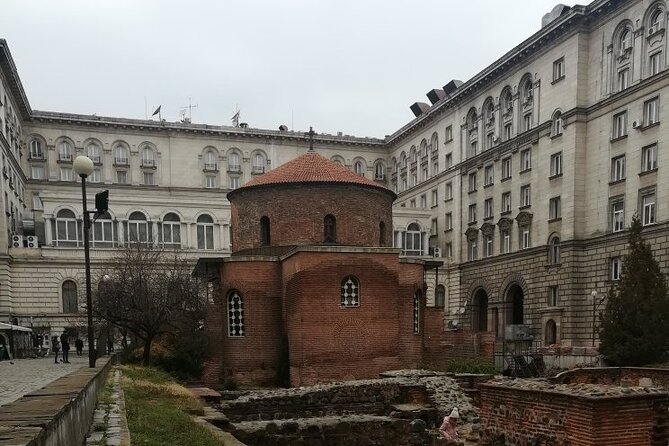
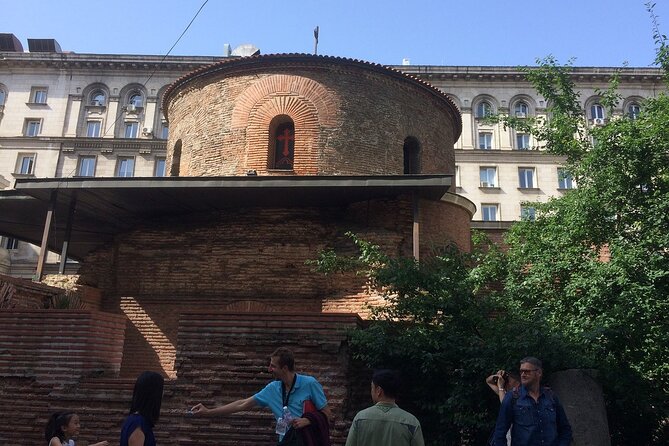
The Ancient Orthodox Church of St. Petka, also called the Old St. Petka, provides a sharp change of mood. This small, tucked-away church helps explain the place of religion during Bulgaria’s communist years.
The stop is brief, around ten minutes, and admission is free. Its value is less about a long church visit and more about the question it raises: what happens to faith, worship, and religious buildings when the state promotes an official ideology?
This is one of the tour’s better choices because it adds texture to the political story. Communist history can become a parade of party offices and military monuments. St. Petka reminds you that the system also affected private belief and public religious life.
The Presidency and the arrival of Soviet power
At the Presidency Building, the guide explains the arrival of the Soviet Army in Bulgaria and the political changes that followed. The building gives the discussion a formal setting. This is where the story moves from broad European conflict to the machinery of power inside Bulgaria.
The stop lasts about ten minutes and is free. You will spend much of the time outside, listening to the guide connect the building with the period’s political shifts. The focus is on context rather than entering an attraction, so do not expect an interior tour.
I like this part because it helps you understand why the rest of the route looks the way it does. The later monuments and party buildings were not random additions to Sofia. They formed part of a public message about who held power and what kind of future the country was meant to follow.
More communist-era sights in Sofia:
- Sofia Communist History 2-Hour Tour in a Classic Trabant
★ 5.0 · 45 reviews - Sofia Food & Tasting Tour with Communist-Era Tram Ride
★ 5.0 · 35 reviews - Buzludzha Monument and the Museum of Socialist Art
★ 5.0 · 25 reviews - Sofia Under Communism: Self-Guided Puzzle Quest
★ 5.0 · 9 reviews
The Largo, the red star, and the missing Lenin
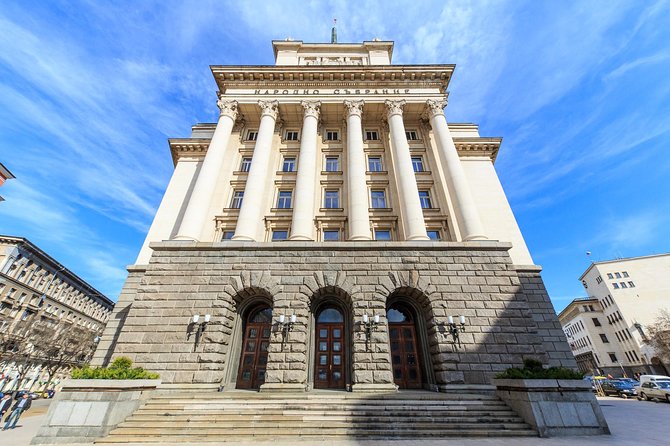
The former Bulgarian Communist Party headquarters sits within the Largo, the monumental complex at the heart of Sofia. This is one of the most important architectural sections of the walk. Broad spaces and imposing government buildings were designed to project order, authority, and permanence.
The guide tells the story of the red star and the former statue of Lenin. These details make the political symbolism easier to grasp. A red star was not merely decoration. It marked the presence of the party and its ideology in the center of public life. The statue of Lenin represented the wider Soviet model that Bulgarian communism followed.
This is also where the tour looks at what disappeared after the regime fell. Symbols were removed, altered, or physically erased, leaving gaps and traces that you might otherwise walk past. The discussion helps you read Sofia’s architecture as evidence, not just scenery.
City Garden and the story of the Mausoleum
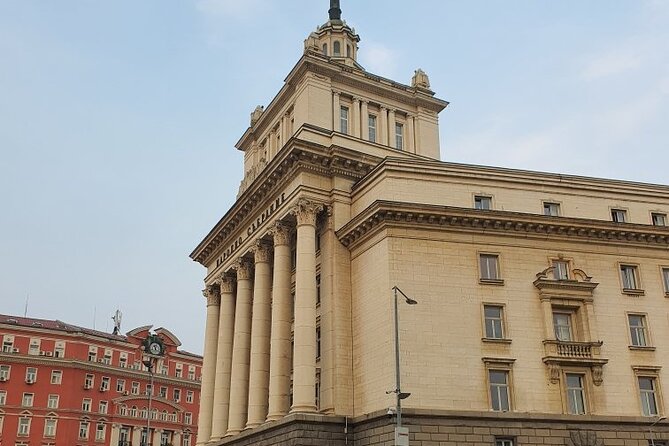
In City Garden, the guide recounts the story of the Mausoleum. This is an important stop precisely because the building is gone. Its absence says something about the effort to remove communist symbols after 1989 and about how quickly a once-sacred political site could become unacceptable.
The tour may point out marks where communist emblems were chiseled away. It also touches on former spaces linked to interrogation and state control, including a restaurant back entrance associated with that past. These details bring the history down to street level.
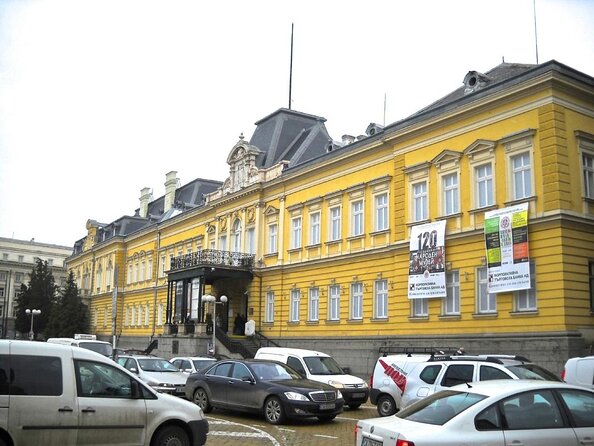
The stop near the former Royal Palace adds another layer. You hear about the building during the early communist years, when the country was moving from monarchy into a new political order. The contrast between royal Bulgaria and the communist state is useful. It shows that the regime was not simply built on an empty site. It took over existing buildings and reshaped their meaning.
The Soviet Army Monument and Sofia’s arguments
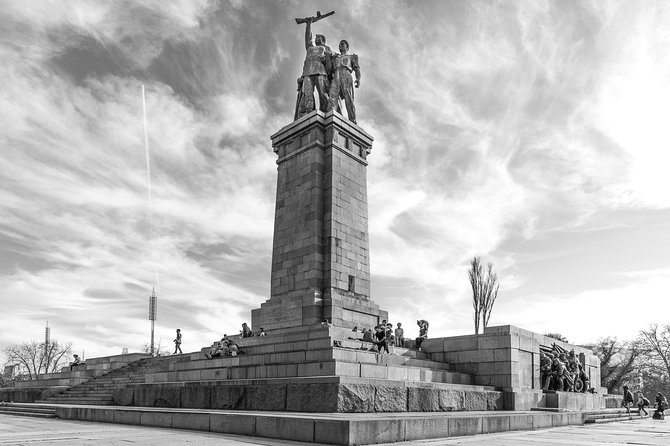
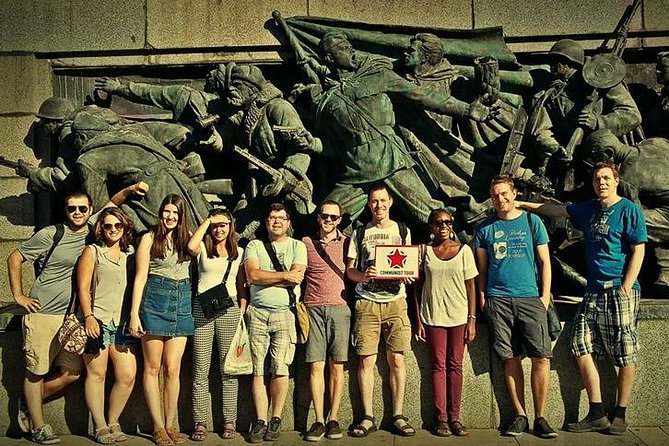
The Soviet Army Monument is probably the tour’s most visually striking political stop. It is also Sofia’s most controversial communist-era monument. The guide explains its purpose, the early protests against communist rule, and the way graffiti has turned the monument into a changing public statement.
Allow about fifteen minutes here. You will have time to look at the sculpture and hear why it remains disputed. The monument represents liberation to some people and Soviet domination to others. That conflict is central to understanding Bulgaria’s complicated relationship with the period.
The graffiti matters because it shows that monuments are not frozen. Public opinion keeps changing, and the surface of the monument has become a place where that argument is displayed. I would pay close attention to the guide’s explanation rather than treating the site as a simple photo stop.
This is also one of the places where the tour’s age and politics may feel most immediate. You are not studying a distant empire. You are looking at a monument that still shapes arguments about national identity, memory, and Russia’s role in Bulgaria.
NDK, Sofia’s grand communist cultural project
The National Palace of Culture, usually called NDK, is the biggest communist landmark on the route. It was built as a major cultural hub and remains one of Sofia’s best-known public buildings.
The guide explains what NDK represented and how the project fit the state’s desire to display confidence, order, and cultural ambition. Its scale is easy to read from the outside. The building was meant to show that the system could create impressive public institutions and put Sofia on a grand stage.
At the same time, the tour does not treat size as proof that the system worked well. A large cultural building can serve genuine public needs while also functioning as political display. That tension is part of the discussion.
The walk ends near NDK, next to a piece of the Berlin Wall on the left side of the park. The fragment provides a fitting final image. The wall divided Europe for decades, then became a symbol of the system’s collapse. The guide uses it to explain how the communist period ended and how Bulgaria moved into a different political era.
How much walking and how much talking?
Plan on roughly three hours and a good amount of walking. The route is not described as difficult, and guides have built in breaks, but it is not ideal if you have limited mobility or want a mostly seated activity.
The rhythm is usually a stop, a story, and a walk to the next site. That keeps the afternoon moving and gives you time to absorb the material. The guide may use photographs to show buildings, symbols, or scenes that no longer exist, which is especially useful when discussing the Mausoleum, Lenin’s statue, and removed communist markings.
The group can contain up to 25 people. That is small enough for questions to be practical, though the experience will feel more personal with a smaller turnout. English is the offered language, and a professional local guide is included.
Weather matters. This is an outdoor tour, and people have completed it in freezing temperatures and rain, but that does not mean you should ignore the forecast. Wear shoes suited to several hours on city streets and bring a rain layer when needed. If a storm interrupts the walk, a short café break may be possible, but you should still dress for outdoor time.
Is the $21.77 price good value?
At $21.77 per person, this is a strong value if you want more than a standard introduction to Sofia. You get about three hours with a local guide, a route through several central sights, and historical interpretation that would take considerable reading to assemble on your own.
The price does not cover paid museum admissions, but each listed stop is free. More important, the main product is the explanation. The Soviet Army Monument, NDK, and Largo are easy enough to see independently. What is harder to find on your own is the connection between them, the personal stories, and the meaning of symbols that have been removed.
The tour has a 4.9 rating from 690 reviews, with 98 percent of people recommending it. Those figures suggest a consistently strong experience, especially for people interested in recent political and social history. I would still weigh the walking distance and timing before booking, since a high rating cannot make a winter afternoon warmer or shorten the route.
Free cancellation is available until 24 hours before the 4 pm start time. Changes or cancellations inside that window are not accepted for a refund.
Who will get the most from this tour?
I would choose this walk if you want to understand Bulgaria rather than simply collect photographs of Sofia’s main buildings. It suits anyone curious about Cold War politics, public memory, architecture, or how ordinary people lived under a one-party system.
It is also a good early activity in Sofia. One guest took it soon after arriving and found that it helped make sense of the country. I can see why: the route gives you political background, city orientation, and several major sights in one afternoon.
Families can take part, provided children are accompanied by an adult. Guides have made an effort to involve children with questions and accessible explanations. Still, the subject is serious, and younger children may not enjoy three hours of political history.
I would skip it if you want an indoor museum visit, a short walk, or a tour focused mainly on ancient Roman and Orthodox Sofia. This experience is about the 20th century, public power, and the marks communism left behind.
Should you book the Communist Walking Tour of Sofia?
Book it if you want a clear, personal introduction to Bulgaria’s communist period and do not mind walking across central Sofia for three hours. The strongest parts are the guides’ family stories, the balance between political facts and ordinary life, and the chance to see places such as the Largo, Soviet Army Monument, and NDK with new context.
Choose an earlier activity in winter if seeing the monuments clearly is important to you. Otherwise, the 4 pm departure gives you a useful afternoon route and ends with a fitting piece of the Berlin Wall. For the price, this is one of the better ways to understand the recent past that still shapes Sofia today.
FAQ
Where does the Communist Walking Tour of Sofia start?
It starts at Sofia City Court, the Palace of Justice, at 2 Vitosha Boulevard in Sofia’s Old City Center.
What time does the tour begin?
The tour begins at 4 pm.
Where does the tour end?
It ends next to a piece of the Berlin Wall on the left side of the National Palace of Culture park.
How long does the tour last?
The tour lasts approximately three hours.
What language is the tour offered in?
The tour is offered in English.
What is included in the price?
A local guide and a professional guide are included.
What is the maximum group size?
The group can include a maximum of 25 people.
Are children allowed to join?
Yes. Children must be accompanied by an adult.
Are service animals allowed?
Yes, service animals are allowed.
Can I cancel for a full refund?
Yes. You can cancel at least 24 hours before the start time for a full refund. Cancellations made less than 24 hours before the start time are not refunded.
Is the tour suitable for most people?
Most people can participate, but the route involves a fair amount of walking. It may not suit people with limited mobility.
New around Sofia
- Sofia Hidden Gems: Small-Group Walking Tour with Tram Ride★ 5.0 · 7 reviews
- Private Winter Day Trip to the Rila Mountain★ 4.5 · 3 reviews
- Via Ferrata Adventure on Kuklata peak 2257 m in Rila Mountain★ 5.0 · 8 reviews
- Veliko Tarnovo and Arbanassi Small-Group Day Trip from Sofia★ 4.5 · 13 reviews
- Tour to Koprivshtitsa and the Buzludzha monument incl the Seuthes Thracian Tomb★ 3.5 · 3 reviews
- Unique experience to sleep in Rila Monastery★ 5.0 · 6 reviews
- Catacomb Tour in Sofia guided by a Local★ 4.5 · 3 reviews
- Full day tour to Plovdiv with lunch★ 4.5 · 12 reviews
Communist Heritage Tours, compared.
Sofia Food & Tasting Tour with Communist-Era Tram Ride
Read our review →Buzludzha Monument and the Museum of Socialist Art
Read our review →
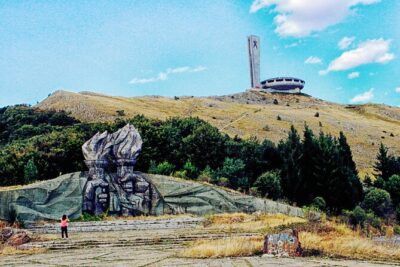
A Day trip to the Thracian Kings, The Valley of Roses & Buzludzha
Read our review →
Explore Bulgaria’s COMMUNISM Era–Todor Zhivkov DayTrip from Sofia
Read our review →
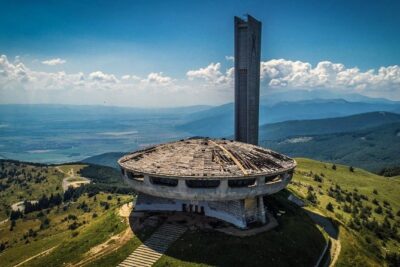
Symbol of the Communism Buzludzha monument and the Rose valley
Read our review →Browse the lists this tour appears in