
Reviewed · WALKING TOURS
Private city walking tour of Sofia
Sofia packs Roman ruins, Orthodox churches, a mosque, a synagogue, royal buildings, and Communist-era power blocks into a remarkably compact center. This private walk connects them all, ending at Alexander Nevsky Cathedral, the city’s grandest landmark.
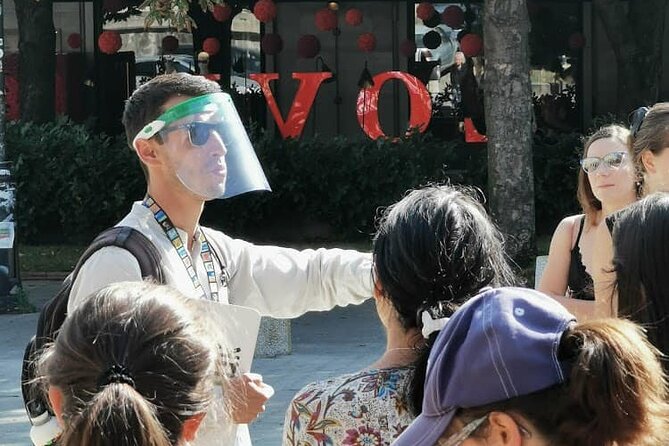
I like the personal pace and the broad view of Sofia’s past. You get one guide for your group, with room to ask questions, and the route brings Bulgaria’s Orthodox, Catholic, Muslim, and Jewish stories into the same two-hour walk. Guides Vasil and Mina are singled out for lively explanations and warm, attentive hosting.
The catch is time. With roughly 17 stops in two hours, this is a brisk introduction rather than a slow inspection of each site. Most admission fees are not included, and the price of $183.90 per person makes the tour easiest to justify for a small group sharing the private experience.
Key points to know before booking
- Sofia’s major sights fit into one central walk: The route runs from Saint Nedelia Cathedral to Alexander Nevsky Cathedral, passing ancient Serdika, the Largo, royal buildings, and several places of worship.
- The guide makes the difference: Vasil and Mina are praised for turning dates and buildings into clear stories, with a friendly style that keeps the walk moving.
- You see several faiths in one morning: Orthodox, Catholic, Muslim, and Jewish landmarks all appear on the route.
- Expect a fast pace: Stops are often five or ten minutes, so this is best for orientation and context rather than extended sightseeing inside museums or churches.
- The tour is genuinely private: Only your group takes part, and a private guide can adjust explanations and answer your questions.
- The finish is Sofia’s postcard view: Alexander Nevsky Cathedral provides a strong final stop after the city’s Roman, Ottoman, royal, and Communist chapters.
A smart first look at Sofia’s long story
Sofia is easiest to understand when you see its layers in order. The city began as ancient Serdika, developed through the Roman and Ottoman periods, took on a royal face, and later gained the stern government buildings of Communist-era central Sofia.
This walk gives you that timeline on foot. You begin at Saint Nedelia Cathedral in the old center and finish at Alexander Nevsky Cathedral. Between them, you pass ruins below modern streets, a working mosque, the largest synagogue on the Balkan peninsula, former royal property, and the broad government complex known as the Largo.
I especially like the range. Many city walks focus only on Orthodox churches and national monuments. This one makes room for the smaller Catholic community, Bulgaria’s Muslim population, and the Jewish community, too. That wider view helps you read Sofia as a meeting point of cultures rather than a single-story capital.
The tour is offered in English and includes a certified local guide. Since it is private, you are not squeezed into someone else’s timetable. You can ask about a church, a political symbol, or a detail that catches your eye, though the guide still has a lot to cover in a short period.
More Walking Tours in Sofia
- Communist Walking Tour of Sofia
★ 5.0 · 690 reviews - Sofia Highlights 2 Hour Sightseeing Walking Tour
★ 5.0 · 442 reviews - Guided Walking Tour of Sofia
★ 5.0 · 143 reviews
Saint Nedelia and the opening chapter
The meeting point is Orthodox Cathedral Saint Nedelia, at 20 pl. Sveta Nedelya in Sofia’s old city center. The cathedral gives the guide a fitting place to begin with a short introduction to Sofia’s past.
The first story is a grim one. You learn about the largest terrorist attack ever carried out in Bulgaria, which took place at the cathedral. This is not light sightseeing, but it gives important context about the country’s political violence and the weight carried by this central church.
The route then passes the impressive Palace of Justice. You should expect to view the building from outside rather than take a formal tour of its interior. Its scale helps show how Sofia’s central district mixes religious buildings with the institutions of law and government.
Next comes Sofia’s largest Catholic church. The stop adds a useful correction to the idea that Bulgaria is religiously uniform. The guide explains the small Catholic community in Bulgaria, giving you a better sense of the country’s religious mix before the route moves toward the center’s older archaeological remains.
Roman Serdika beneath modern Sofia
One of the most satisfying parts of the walk is the Ancient Serdika Archaeological Complex. Beneath the modern center lie remains of the ancient city, and you walk around the excavations for a short look at Sofia’s Roman past.
The stop is listed at about five minutes, so do not expect a museum-length visit. Its value comes from the contrast: busy modern Sofia above, ancient streets and foundations below. A guide can make that contrast easier to grasp than a quick glance at the ruins on your own.
Nearby, the Monument of Saint Sofia introduces the city’s patron. The statue has sparked controversy, and the guide explains why. This is the sort of detail that gives a public monument more meaning than its photo value alone.
You also pass the Church of St Petka of the Saddlers, a small church dating from the Ottoman period. Its modest size is part of the appeal. It does not compete with Sofia’s giant cathedrals, but it shows how older religious buildings remain woven into the city center.
The mosque, synagogue, and thermal baths
Banya Bashi Mosque is Sofia’s only functioning mosque today. The short stop covers the story of Bulgaria’s Muslim community, adding another layer to the city’s religious life.
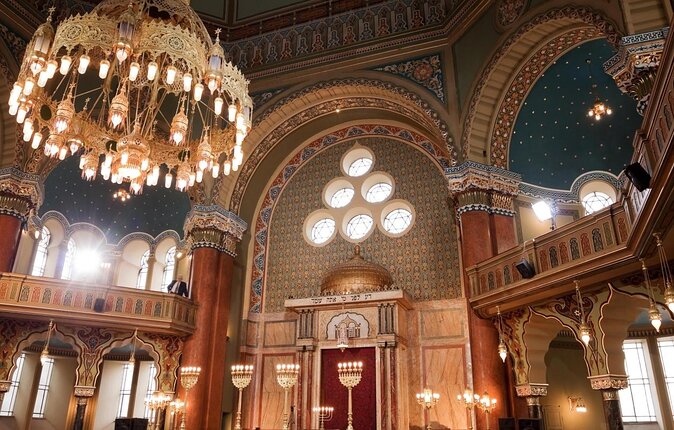
The route then reaches Sofia Synagogue, described as the largest synagogue on the Balkan peninsula. Here the guide shares the extraordinary history of Bulgaria’s Jewish community. The visit is especially useful because it places Sofia’s religious buildings beside one another, not as isolated monuments but as part of the same urban story.
Admission is not included at these places, and the tour details do not promise extended interior visits. Plan on hearing the explanation and seeing the sites along the route unless your guide confirms that entry is possible during your walk.
At the Regional History Museum of Sofia, you see the former Central Mineral Baths. The building now houses the city museum, and you get a chance to taste Sofia’s famous thermal water. That small sensory detail breaks up the monuments and gives the city a physical connection to its springs.
Because many stops last only five or ten minutes, I would treat this section as a guide-led introduction. If the mosque, synagogue, or museum interests you most, mark it for a later, longer visit.
A different sort of day out, still within reach of Sofia:
- Rila Monastery and Boyana Church Full-Day Tour
★ 4.5 · 918 reviews - Sofia Escape Room – Teorema Rooms
★ 5.0 · 895 reviews - From Sofia: Rila Monastery & Boyana Church Day Tour
★ 4.5 · 866 reviews - Admission Ticket to the Museum of Illusions in Sofia
★ 5.0 · 659 reviews
The Largo and the machinery of power
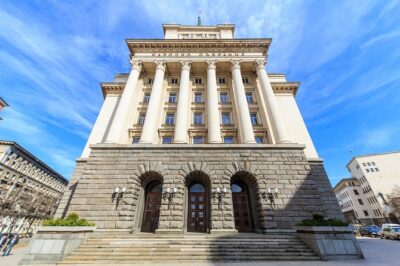
The walk next reaches the National Assembly area and the Largo of Sofia. The broad complex was built from the ruins left by World War II by the new Communist government. Its design was meant to show the strength of the regime.
You see the Council of Ministers, the National Assembly, and the Presidency gathered in this formal setting. This is one of the best parts of the route for understanding modern Bulgarian politics through architecture. The buildings are not just backdrops. Their size, alignment, and hard lines were meant to make government feel permanent and powerful.
At the Presidency, Bulgarian National Guards are stationed in front of the building. The guide explains the symbolism connected with this unusual job, and you may be able to take a picture with them. The stop is short, but it adds a human detail to an otherwise formal government district.
The National Archaeological Museum follows. Its building was once a mosque and now houses Sofia’s oldest museum. Again, the tour gives you a useful outside view and a reason to return if ancient Bulgaria interests you. Entry is not included, so you should not assume the two-hour walk includes time for a full museum visit.
Roman ruins and the city’s favorite green pause
Saint Georgi Rotunda Church is Sofia’s oldest building. It is tucked away in the middle of the modern city, another reminder that Sofia’s past is often underfoot or around the corner rather than displayed in one grand historic quarter.
The rotunda brings the Roman chapter back into focus after the government buildings. The stop lasts about five minutes, enough for the guide to explain why this small structure matters and to help you locate it among the surrounding streets and courtyards.
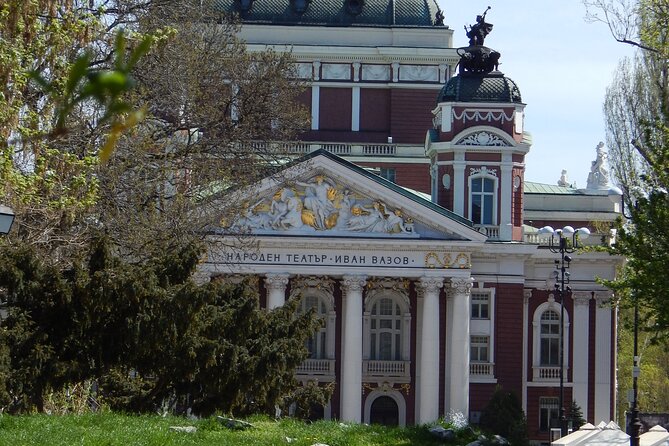
You then reach the Ivan Vazov National Theater, one of Sofia’s most attractive buildings. It is dedicated to Ivan Vazov, Bulgaria’s most beloved author. The theater and its setting offer a gentler change of mood after the stark Largo and the heavy political stories.
A nearby park is a favorite with locals and gives you a quick feel for Sofia’s youthful spirit. The supplied details do not name the park, but the point is clear: the walk is not only a parade of official monuments. You also pass through a place where city life feels more relaxed.
Royal Sofia, yellow cobblestones, and a wish-making church
The National Art Gallery occupies Bulgaria’s former Royal Palace and also houses the National Ethnographic Museum. You see the building as part of Sofia’s royal chapter, after the Roman and Ottoman remains and before the city’s modern political center.
The surrounding yellow cobblestones have their own story, which the guide explains. They are one of Sofia’s most recognizable street details, and learning why they are there makes the pavement more than a colorful photo surface.
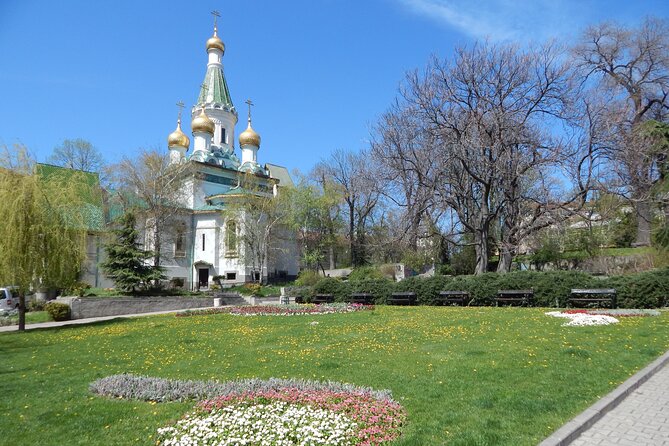
Saint Nikolas Russian Church is another brief but memorable stop. It is associated with the belief that wishes come true there, and the guide explains the story behind that tradition. The church is small, decorative, and different in character from the larger Bulgarian Orthodox buildings on the route.
The stop is a good example of the tour’s style. You receive a short story, a visual landmark, and a reason to notice the building. If you want to pray, explore the interior, or take a quiet pause, the fixed two-hour schedule may feel too tight.
The final approach to Alexander Nevsky
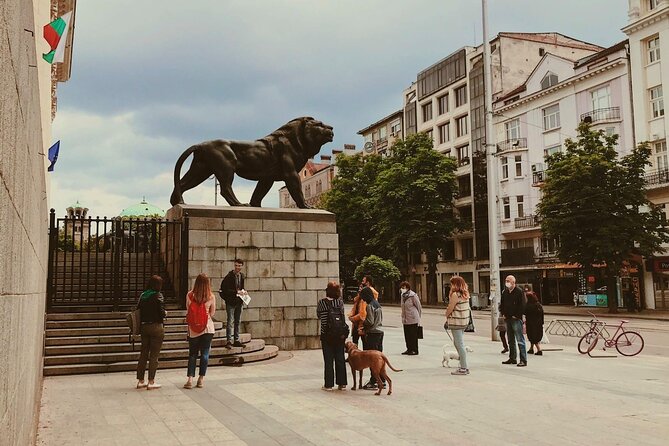
The Monument of the Unknown Soldier honors Bulgarian heroes, with a lion statue at the center of the memorial complex. The stop adds a national and emotional note before the final churches.
Next comes St. Sophia Church, the building that gave Sofia its name. Its plain, sturdy presence contrasts with the ornate cathedral ahead. The guide explains how the church shaped the identity of the city, linking a place of worship with the name used by the capital today.
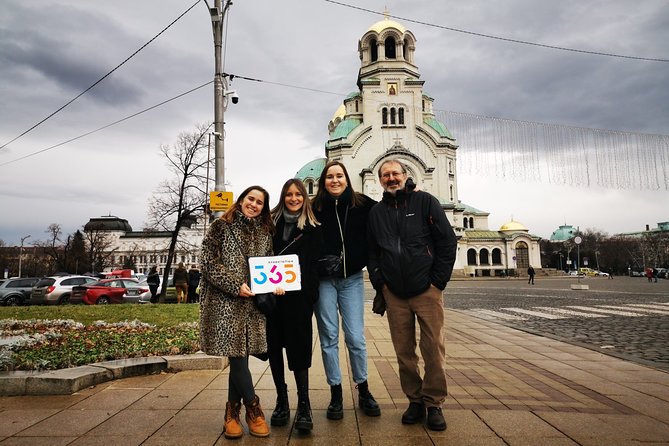
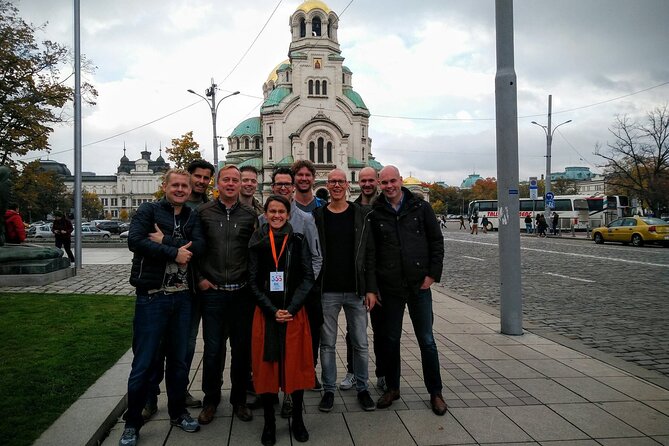
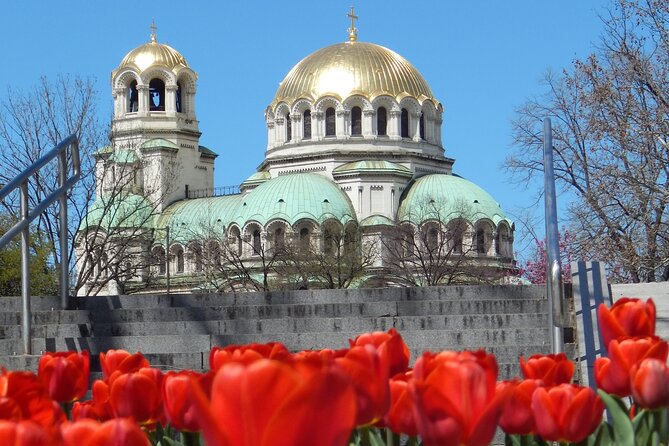
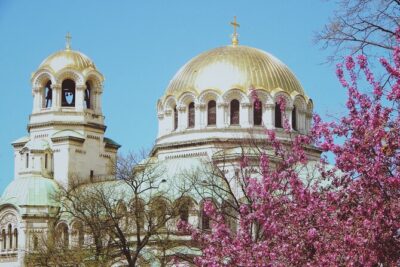
The final stop is St. Alexander Nevsky Cathedral, Sofia’s most famous landmark. Its architecture and history deserve more than a rushed photograph, but ending here gives the walk a clear high point. After seeing the city’s Roman foundations, Ottoman-era church, religious communities, royal palace, Communist government blocks, and national memorials, you arrive at the monument most people associate with Sofia.
The tour ends at ploshtad Sveti Aleksandar Nevski in Sofia Center. That is useful if you want to continue sightseeing from the cathedral rather than return to the starting point.
What $183.90 per person buys you
At $183.90 per person, this is not a bargain-priced group walk. The value depends heavily on your party size, the guide assigned to you, and how much you value private attention. Group discounts are available, so check the final price for your group rather than judging the per-person figure alone.
You are paying for a certified local guide, a private format, and a route that covers a large portion of central Sofia in about two hours. If you have only a short stay, that concentrated introduction can save time and help you choose which sites deserve a return visit.
The price is harder to justify if you want long interior visits or a relaxed photographic walk. Admission tickets are not included, and personal expenses and tips are extra. Many stops are exterior views or short explanations, so the main product is interpretation and orientation, not entry to a series of museums.
The strongest value comes when you use the walk as a first day in Sofia. Let the guide explain the city’s structure, then return independently to the museum, synagogue, churches, or cathedral that caught your attention.
Timing, comfort, and who should book
This is a walking tour with no transport between stops. The route stays in central Sofia and begins near public transportation, making it practical for most people who can take part in a normal city walk. Service animals are allowed.
The schedule is tightly packed. Several stops are five minutes, while a handful receive ten minutes. Wear comfortable shoes, keep water handy, and avoid booking it when you need a slow morning or extensive time inside each building.
I would recommend it most to first-time visitors, people with a free morning, and anyone who wants Sofia’s main sights explained in a clear order. It also suits families or friends who prefer to ask their own questions rather than follow a large shared group.
The private format works well for mixed interests. One person can ask about Roman Serdika, another about Communist architecture, and another about religious life. A group of five, like the party that praised Mina’s tour, can spread the cost more sensibly than a solo participant.
The guide matters greatly. Vasil is praised for combining an academic background in tourism with friendly, enthusiastic storytelling. Mina is praised for anecdotes that bring Sofia’s past to life. Those details suggest the experience can be warm and engaging, but your booking does not guarantee either guide unless the provider confirms it.
Confirmation arrives within 48 hours, subject to availability. You can cancel for a full refund up to 24 hours before the start time. Changes or cancellations inside that window are not accepted for a refund.
Should you book this Sofia walk?
Book it if you want a private orientation to central Sofia and value stories as much as monuments. The route gives you an unusually broad picture in a short time, from the cathedral attack and Roman Serdika to the mosque, synagogue, Royal Palace, Communist Largo, and Alexander Nevsky Cathedral.
Think twice if your priority is entering every major building, spending quiet time at each church, or keeping costs low. At $183.90 per person, the experience makes the most sense for a small group using the private guide to get organized quickly.
For a first morning in Sofia, I like the plan: start at Saint Nedelia, listen closely, note the places you want to revisit, and finish beneath the domes of Alexander Nevsky. It is fast, but it gives the city a readable shape.
FAQ
How long does the private Sofia walking tour last?
The tour lasts approximately two hours.
Where does the tour begin?
It begins at Orthodox Cathedral Saint Nedelia, Old City Center, pl. Sveta Nedelya 20, Sofia.
Where does the tour end?
The walk ends at ploshtad Sveti Aleksandar Nevski, near St. Alexander Nevsky Cathedral.
Is the tour private?
Yes. Only your group participates in the activity.
What language is the tour offered in?
The tour is offered in English.
Is a guide included?
Yes. A certified local tour guide is included.
Are admission tickets included?
No. Admission tickets are not included. Personal expenses and tips are also not included.
Can I cancel for a full refund?
Yes. You can cancel at least 24 hours before the experience start time for a full refund. Cancellations or changes made less than 24 hours before the start time are not accepted for a refund.
New around Sofia
- Sofia Hidden Gems: Small-Group Walking Tour with Tram Ride★ 5.0 · 7 reviews
- Private Winter Day Trip to the Rila Mountain★ 4.5 · 3 reviews
- Via Ferrata Adventure on Kuklata peak 2257 m in Rila Mountain★ 5.0 · 8 reviews
- Veliko Tarnovo and Arbanassi Small-Group Day Trip from Sofia★ 4.5 · 13 reviews
- Tour to Koprivshtitsa and the Buzludzha monument incl the Seuthes Thracian Tomb★ 3.5 · 3 reviews
- Unique experience to sleep in Rila Monastery★ 5.0 · 6 reviews
- Catacomb Tour in Sofia guided by a Local★ 4.5 · 3 reviews
- Full day tour to Plovdiv with lunch★ 4.5 · 12 reviews
Walking Tours, compared.
Sofia Highlights 2 Hour Sightseeing Walking Tour
Read our review →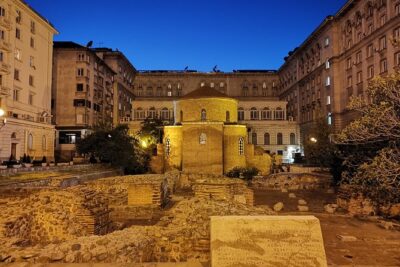
Food Walk: Bulgarian Food and Culture Tour in Plovdiv
Read our review →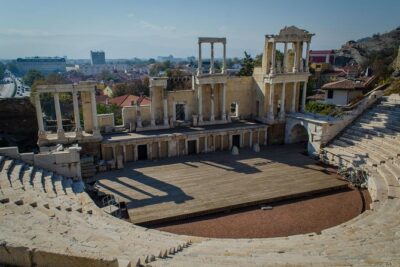

Browse the lists this tour appears in