
Reviewed · CASTLES AND FORTRESSES
Skip the Line: Medieval Tuida Fortress tours
Tuida Fortress gives you more than a few old walls. Inside the remains are Roman defenses, Bulgarian buildings, a basilica, a rare baptistery, and traces of a settlement that served military, religious, and commercial purposes. The English guiding matters here because the ruins make much more sense once someone explains what you are seeing.
I especially like two things: the hands-on medieval activities, including archery and period clothing when booked, and the strong connection to Sliven’s early Bulgarian past. The main consideration is simple: without a guide, the site can feel sparse, and some signs have been hard to read. Plan on interpretation, not just a quick walk around stones and scrub.
Key points to know before visiting
- Roman and Bulgarian layers share one hilltop: Tuida was rebuilt under Roman Emperor Anastasius I and later adapted by the Bulgarians.
- The fortress has unusual religious remains: A three-nave basilica and a decorated baptistery reveal its importance as a Christian center.
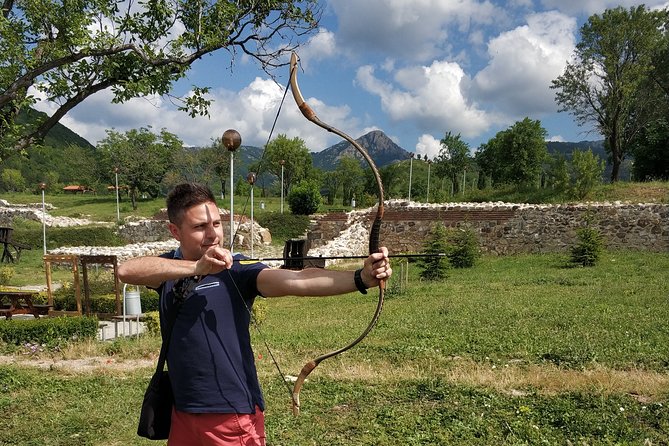
- Archery and medieval dress add real fun: These options work especially well for families and visitors who want more than archaeology.
- The price is modest: At about $8.16 per person, the experience can offer good value when guiding or activities are included.
- The view and setting are part of the appeal: The fortress has open views around Sliven, even though the surviving walls are incomplete.
- Wear solid walking shoes: The remains are uneven, and vegetation can make some paths less clear.
Why Tuida Fortress is worth your time in Sliven
Tuida is not the kind of fortress that overwhelms you with towering walls. It is an archaeological site, and much of what remains is low masonry, foundations, gates, towers, and partial structures. That can sound modest, but it also makes the place more revealing when you have someone to explain its layers.
The fortress occupied about 40 decares, roughly 10 acres. It was not an isolated military outpost. A larger basilica outside the walls suggests that the settlement spread beyond the defended area, with religious and civilian life continuing around the stronghold.
I like this kind of site because it asks you to picture the town that once stood here. You can trace the outline of defense, worship, trade, and daily work rather than seeing only one grand monument. The setting also gives you a useful introduction to Sliven’s place south of the Balkan Mountains.
The experience is offered with a mobile ticket and in English. The listed price is about $8.16 per person, a reasonable amount if your booking includes guiding or one of the activity options. Admission to the fortress itself is listed as free, so check exactly what your selected option covers before paying. The value comes from the explanation and activities, not simply from entering the grounds.
More fortresses and castles around Bulgaria:
- Small group tour to Plovdiv, Asen’s Fortress and Bachkovo Monastery
★ 5.0 · 164 reviews - Full-Day Belogradchik Rocks and Belogradchik Fortress from Sofia
★ 5.0 · 75 reviews - Full-Day Plovdiv and Asen’s Fortress Tour from Sofia
★ 4.5 · 36 reviews
Entering the fortress and reading its Roman past
The earliest important phase described at Tuida reaches back to Late Antiquity. The fortress escaped destruction during the Gothic invasion of 378 AD, but the Huns destroyed it in the fifth century.
Roman Emperor Anastasius I, who ruled from 491 to 518 AD, ordered the fortress rebuilt. The new work preserved parts of the earlier design while strengthening and improving the site. As you walk among the surviving walls, towers, and gates, you are looking at a place shaped by repeated rebuilding rather than a single construction campaign.
That distinction is useful. A wall at Tuida may represent more than one period, and the same hill served changing military needs. The fortress was eventually destroyed around 598 or 599 AD, most likely during attacks by Avars and Slavs.
A guide can turn this sequence into a clear story. Without one, you may see masonry but miss why the site mattered, how it changed, and why the surviving remains are placed where they are. If you have limited time in Sliven, an English guide is the part I would prioritize.
The Bulgarian settlement that followed
The area around modern Sliven became part of the First Bulgarian Empire around 705 AD. Bulgarian Khan Tervel gained the Zagore region south of the Balkan Mountains after helping Byzantine Emperor Justinian II regain his throne in Constantinople.
A Bulgarian settlement with an unknown name was later built on the site. One of the most striking finds is a lead seal belonging to Bulgarian Knyaz Boris I Mihail, who ruled from 852 to 889 AD. That small object links the fortress to the political world of medieval Bulgaria, far beyond the earlier Roman period.
The Bulgarians rebuilt the walls and the aqueduct. They also added buildings faced with marble slabs made by stone cutters in Veliki Preslav, then the Bulgarian capital. Bricks marked with an Ancient Bulgar sign resembling |Y| have also been found.
I find these details especially helpful because they keep Tuida from being treated as only a Roman ruin. The fortress continued to matter after the Roman period, and the Bulgarian remains show that people repaired, adapted, and used the site rather than abandoning its earlier identity.
The basilica and baptistery are the site’s great surprise
Tuida’s religious remains are among its most important features. Written sources indicate that the fortress had a bishop from the fourth century onward, and the excavations found a cult complex used from the fourth through the thirteenth century.
Inside the fortress are the remains of a three-nave, one-apse Early Christian basilica. Nearby is a distinctive baptistery decorated with murals and mosaics. Those features make the site more than a defensive enclosure. They show that Christian worship and church administration were part of life here for centuries.
A second, larger basilica was found outside the walls. Its location supports the idea that the settlement extended well beyond the fortified area. When you stand among the ruins, try to picture a community spreading around the stronghold, with people coming for worship, trade, work, and protection.
Two marble pedestals dedicated to Apollo and Zeus were also found. They preserve the fortress name in forms such as Tuida or Suida, also recorded in written sources as Tsoida. A third-century inscription describes the settlement as a marketplace, giving the site an economic role as well as a military and religious one.
These finds are easy to overlook if you simply walk the perimeter. They are the reason I would not treat Tuida as a self-guided photo stop unless you have already read about the archaeology.
A different sort of day out, still within reach of Bulgaria:
- From Bucharest: Full-Day Trip to Bulgaria
★ 4.6 · 1,008 reviews - Rila Monastery and Boyana Church Full-Day Tour
★ 4.5 · 918 reviews - Sofia Escape Room – Teorema Rooms
★ 5.0 · 895 reviews - From Sofia: Rila Monastery & Boyana Church Day Tour
★ 4.5 · 866 reviews
Activities that make the ruins easier to remember
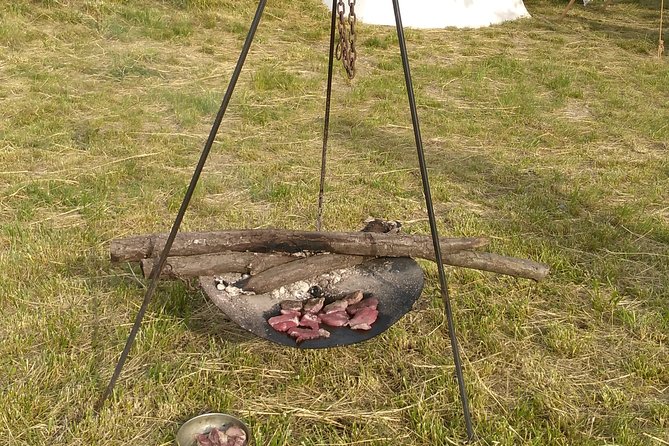
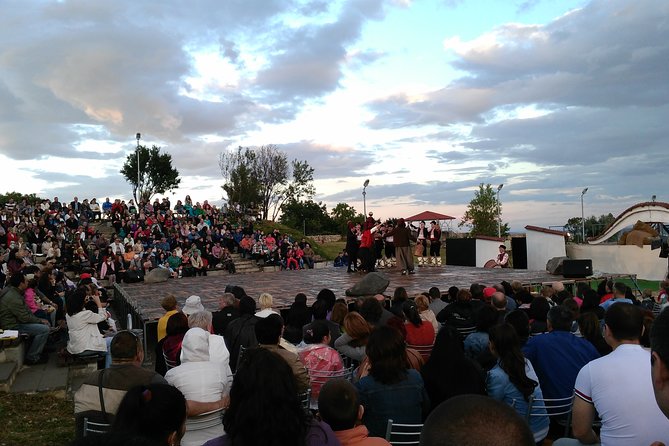
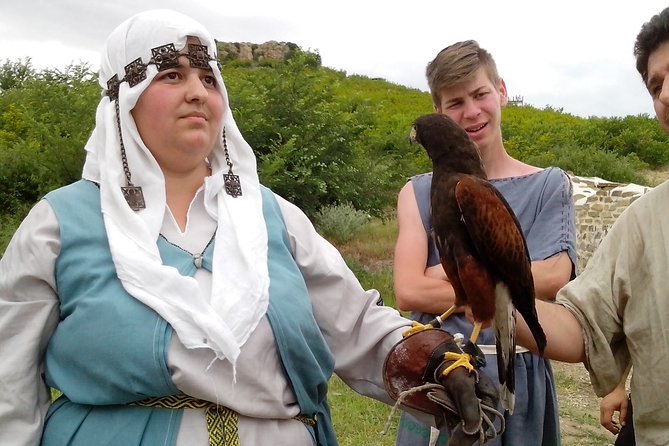
The optional archery and medieval dress activities are not essential to understanding Tuida, but they change the mood of the visit. You can handle the historical setting in a more playful way, try medieval games, and dress in clothing inspired by the period.
Archery is a particularly good choice for families and groups with mixed interests. Someone who might lose interest during a long explanation has a physical activity to look forward to. Medieval dress also gives children and adults a natural way to engage with the setting without pretending that the ruins are a restored castle.
The activities are an option, not something to assume is included in every booking. Select the correct package if you want them. Guiding is also listed as included only if that option is booked, so read the choice carefully.
I would choose the activity package if this is your main stop in Sliven, especially with children or friends. If you mainly want archaeological context and photographs, the guide may be the better use of your budget.
What the archaeological finds tell you
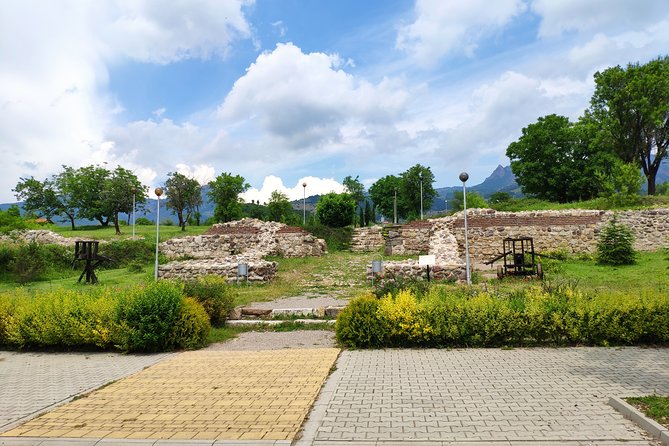
Excavation began in 1982 and resumed in 2004. The work has produced a broad range of objects: iron tools, ceramic vessels, ornaments, coins, and animal bones.
The bones include remains from 14 species of wild and domesticated birds. They include Bonelli’s eagle, western capercaillie, great bustard, and common pheasant. These finds offer a small but vivid look at food, hunting, and the natural surroundings connected with the settlement.
You will not see all of these objects scattered around the ruins. Their value is interpretive. They show that Tuida was a working settlement, not merely a garrison. Tools point to practical labor, ceramics to household and commercial activity, coins to exchange, and animal remains to diet and hunting.
The site may look quiet now, but the evidence points to a busy place with people, animals, trade, worship, and military concerns. That contrast is one of the best reasons to visit.
The views and the practical feel of the site

Tuida has open views around Sliven, and the position helps explain why the site was useful. You can see why a fortified settlement would be placed where it could watch movement through the area.
At the same time, you should set realistic expectations. This is not a fully restored medieval fortress with intact rooms and high battlements. Some sections are low, and the remains can look understated from outside. Vegetation has also made parts of the walking area less clear at times, while some signs have been affected by sun and weather.
That is not a reason to skip the fortress, but it is a reason to plan well. Wear comfortable shoes, allow time to move carefully, and do not expect every feature to explain itself. The site rewards attention and background.
Service animals are allowed, and most people can participate. The maximum group size is listed as 50, which is large enough that the quality of the visit may depend on how the guiding is organized. If you prefer a quieter explanation, ask about the format when booking.
Is the $8.16 price good value?
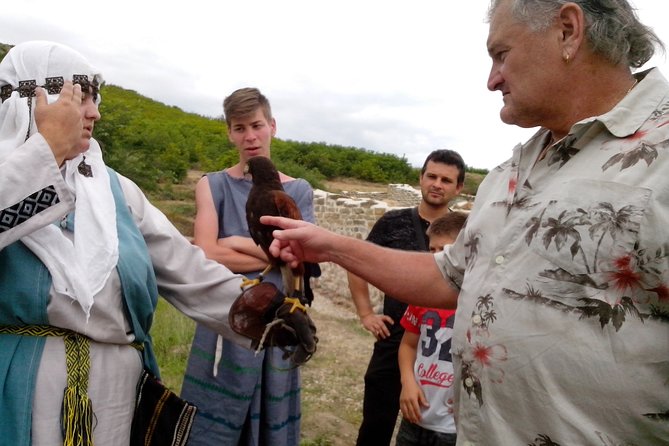
At about $8.16 per person, Tuida is inexpensive compared with many guided historical attractions. The price is most attractive when it includes an English guide, archery, or medieval clothing.
The important detail is that admission to the archaeological site is listed as free. That means you should think of the paid experience as a service package rather than an entrance fee. You are paying for interpretation, organization, and optional activities.
For me, the guide is the strongest value. The fortress has several historical periods and specialized features, including the baptistery, marble pedestals, aqueduct, and Bulgarian building remains. A short explanation can connect them in a way that signage may not.
Food, drinks, and personal expenses are not included. Since the stop is focused on the fortress, plan those separately. The experience is offered in English, which makes it a useful choice if you do not read Bulgarian.
Who should book this experience
I would recommend Tuida to anyone spending time in Sliven who wants local history beyond the usual city walk. It suits families particularly well when archery, games, and medieval clothing are added.
It also fits history-minded visitors who enjoy seeing a place shaped by several eras. Roman, Early Christian, Byzantine, and Bulgarian elements all appear here, and the site has a direct connection to the First Bulgarian Empire.
You may be less satisfied if you want a dramatic, complete castle. The surviving fortress is not restored to its original height, and much of the site requires imagination. A self-guided visit may also feel thin if signs are difficult to read or vegetation obscures the path.
For the best experience, book the English guiding option and wear shoes suited to uneven ground. If you want a more playful visit, add archery and medieval dress.
Cancellation and booking details
Confirmation is provided at booking, and the ticket is mobile. Free cancellation is available up to 24 hours before the experience start time for a full refund. Cancellations or changes made within 24 hours are not refunded or accepted, based on the local start time.
The experience is described as lasting approximately one day, though the supplied details do not give a precise on-site tour length. Treat it as a fortress visit within your Sliven plans and confirm the timing when you book.
Should you book Tuida Fortress?
Yes, if you want an affordable, unusual stop with strong archaeological context and optional activities. I would especially choose it with an English guide, since the site’s low walls and foundations become far more meaningful once you understand the Roman rebuilding, Bulgarian settlement, church complex, and market history.
Book with more caution if you only want spectacular architecture or a restored castle interior. Tuida is about reading clues in the ground, not walking through grand halls. At roughly $8.16, it is an easy addition to a Sliven visit, provided you choose the package that matches your interests.
FAQ
Where is the Tuida Fortress experience located?
It is located in Sliven, Bulgaria.
How much does the experience cost?
The listed price is about $8.16 per person.
Is admission to Tuida Fortress included?
Admission to the archaeological site is listed as free. Paid options can include guiding, archery, and medieval clothing, depending on the package selected.
Is the ticket available on a mobile phone?
Yes. The experience provides a mobile ticket.
Is the experience offered in English?
Yes. English is the listed language for the experience.
Is an English guide included?
Guiding is included if you book the guiding option. It is not listed as included in every package.
Are archery and medieval clothing included?
They are included if you book the option that contains those activities.
What should I wear?
Comfortable shoes are recommended because the fortress includes archaeological remains and walking areas that may be uneven or less clearly maintained.
Can service animals participate?
Yes. Service animals are allowed.
How many people can join the activity?
The maximum group size is 50 people.
Can I cancel for a full refund?
Yes, if you cancel at least 24 hours before the experience start time. Cancellations within 24 hours are not refunded, and changes within that period are not accepted.
New around Bulgaria
- Monasteries and Waterfalls Tour from Veliko Tarnovo★ 5.0 · 8 reviews
- Self-guided Tour in Tsarevets Fortress★ 4.0 · 9 reviews
- Wine Experience & Tasting Hub★ 5.0 · 6 reviews
- Full-Day Private Sightseeing Tour to the North of Varna★ 5.0 · 4 reviews
- Varna Exquisite Wine Tasting★ 5.0 · 5 reviews
- Guided Nessebar Sightseeing Tour with Pick Up★ 5.0 · 6 reviews
- Infinity spa★ 4.5 · 4 reviews
- Private Cape Kaliakra & the Balchik Botanical Gardens from Varna★ 5.0 · 3 reviews
Castles and Fortresses, compared.
Small group tour to Plovdiv, Asen’s Fortress and Bachkovo Monastery
Read our review →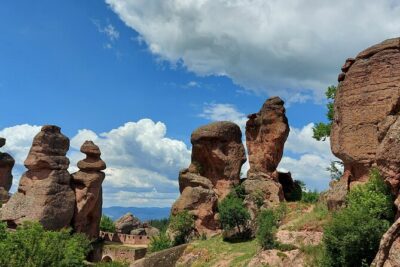
Full-Day Belogradchik Rocks and Belogradchik Fortress from Sofia
Read our review →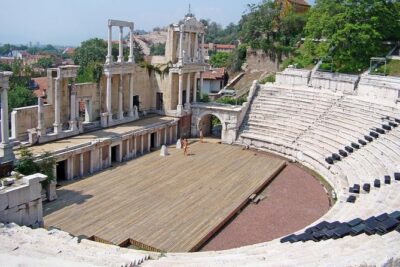
Full-Day Plovdiv and Asen’s Fortress Tour from Sofia
Read our review →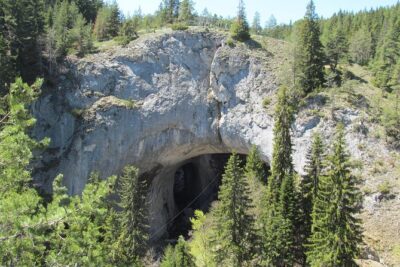
Wonderful Bridges-Bachkovo Monastery-Assen’s Fortress – day tour from Plovdiv
Read our review →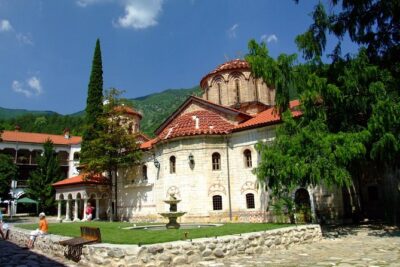
Bachkovo Monastery & Asen’s Fortress – day tour from Plovdiv
Read our review →
Private trip to Bachkovo Monastery and Assen’s Fortress
Read our review →
Plovdiv, Asen’s Fortress and Bachkovo Monastery small group tour with pickup
Read our review →
Browse the lists this tour appears in