
Reviewed · SELF-GUIDED TOURS
Plovdiv Old Town Self-Guided Audio Tour
Plovdiv’s Old Town packs Roman ruins, Ottoman traces, painted Revival-era houses, and hilltop views into a walkable route. This self-guided tour gives you the story as you go, beginning at the ancient stadium and circling through the city’s most important sights.
I like the freedom to set your own pace and the range of stops, especially the Roman Theatre, Nebet Tepe, and Balabanov House. The 15% restaurant discount adds a useful bonus. The main drawback is practical: you must switch between the audio and the map, and the phone map can be hard to read in bright sun.
Key points at a glance
- Twelve Old Town stops: See Roman monuments, Ottoman architecture, churches, museums, and historic houses in one route.
- A flexible 2 to 3 hour walk: The audio access has been extended to 72 hours, so you are not forced to finish in one sitting.
- Excellent Roman highlights: The Ancient Stadium, Ancient Theatre, Small Basilica, and Trakart give the route real archaeological weight.
- Three paid entries: Admission to the Ethnographic Museum, Small Basilica, and Trakart is not included.
- Start and finish at the Ancient Stadium: The route begins and ends in central Plovdiv, near Djumaya Mosque.
- Useful extras: You receive a 15% discount at a city restaurant, and cancellation is free up to 24 hours before the start time.
Why this route works well in Plovdiv
Plovdiv rewards walking, but its layers can blur together if you do not know what you are seeing. One minute you are beside a mosque, the next you are looking into a Roman stadium, then climbing among 19th-century houses on the Old Town hills.
This audio tour gives you a simple thread to follow. You listen as you move, stop when something catches your eye, and spend more time at the places that matter most to you. There is no group schedule and no guide hurrying you onward.
The route is designed for about 2 to 3 hours, although that estimate assumes fairly short stops. If you enter the museums, linger at the Ancient Theatre, or take your time on Nebet Tepe, the walk can easily fill much of a day. The extended 72-hour audio access makes that less of a problem than it once was.
You start at the Ancient Stadium of Philippopolis on Hristo G. Danov Street and return to the same meeting point. The activity operates daily from 9 a.m. to 6 p.m. The ticket is mobile and the audio is offered in English.
More self-guided routes in Plovdiv:
- Roman Plovdiv, Self-Guided Tour and Urban Quest Game
★ 5.0 · 6 reviews - Plovdiv Roman Sights Self-Guided
★ 4.5 · 3 reviews - Rila Monastery and 7 Rila Lakes Self-Guided Shared Trip from Sofia
★ 5.0 · 280 reviews
Roman Plovdiv begins at the Ancient Stadium
Although the route starts at the Ancient Stadium, the first listed stop is Djumaya Mosque, only a short walk away. That opening combination is one of the best features of the walk: Plovdiv’s past does not arrive in neat historical blocks.
The Ancient Stadium of Philippopolis was built in the second century AD during the Roman imperial period. It once hosted public events in the ancient city, and today part of the structure is visible in the center of modern Plovdiv.
You do not need a long visit here to understand the scale of Roman Philippopolis. The stadium sits in an active city setting, which makes the contrast especially useful. Ancient stone is not sealed away from daily life. It is part of the street.
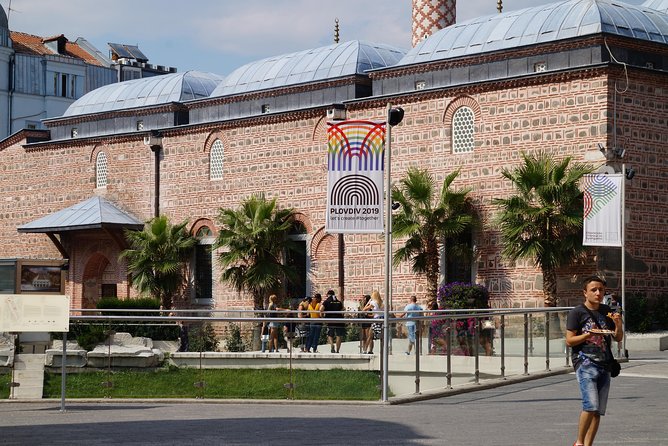
At Djumaya Mosque, you encounter a medieval Muslim monument linked to the reign of either Sultan Murad I or Sultan Murad II. The exact dating is debated, but the larger point is clear: Ottoman Plovdiv followed Roman and Byzantine eras and left its own mark on the city.
The suggested stop is brief, about five minutes. I would treat it as an orientation point rather than a full interior visit, since the information provided does not promise admission inside.
Churches, houses, and Plovdiv’s Revival character
The Church of the Holy Mother of God brings you to another turn in the city’s story. A small church existed here as early as the ninth century, and it was renovated in 1186 by Constantine Pantehi, bishop of Plovdiv.
The site later became part of a monastery. Both church and monastery were destroyed when Ottoman forces took the city in 1371. The stop is a good reminder that Plovdiv’s religious buildings have often been rebuilt, altered, or lost rather than preserved in one uninterrupted form.
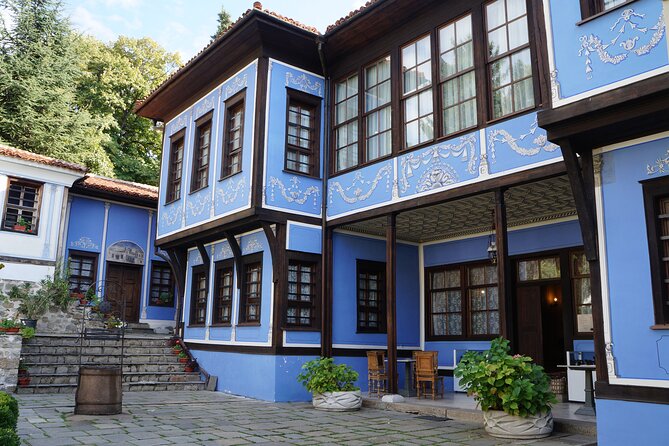
Next comes Casa Lamartine, built by an unknown master-builder in 1829 and 1830. Its symmetrical design makes it one of the Old City’s most attractive houses. The suggested visit lasts about six minutes, enough to appreciate the facade and hear the basic story without turning the walk into an architectural lecture.
The Balabanov House deserves more time. Also known as the House of Hadji Panayot Lampsha, it was built at the beginning of the 19th century and is now a museum house.
These houses are important because they show Plovdiv as a merchant city, not only as a Roman ruin field. Their proportions, decoration, and position on the Old Town slopes help explain the character of the Bulgarian National Revival period. The audio guide is especially useful here, since a quick look at a handsome facade does not tell you who lived there or why the building matters.
The route allows about ten minutes at Balabanov House. That is enough for a short visit, but you should plan extra time if the museum is open and you want to look closely at the interiors.
The Ancient Theatre is the route’s main prize
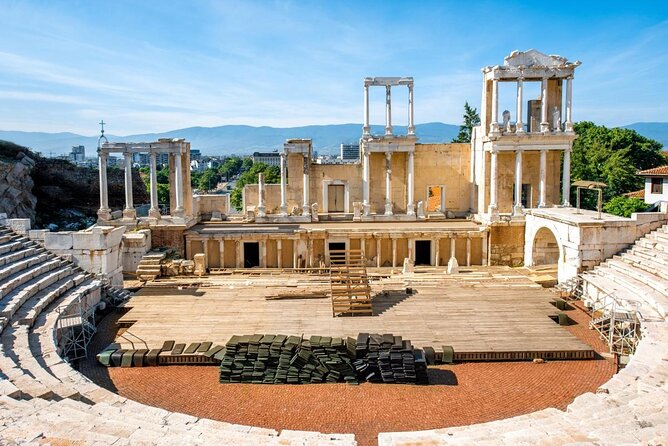
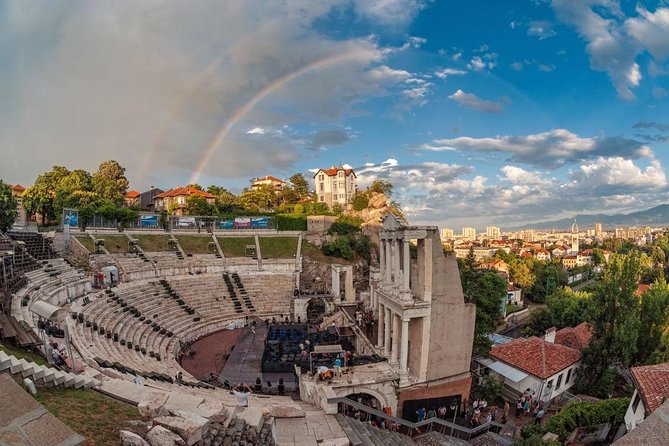
The Ancient Theatre of Philippopolis is the strongest reason to choose this walk. It is one of the best-preserved Roman theatres in the world and sits in the center of modern Plovdiv, on the site of ancient Philippopolis.
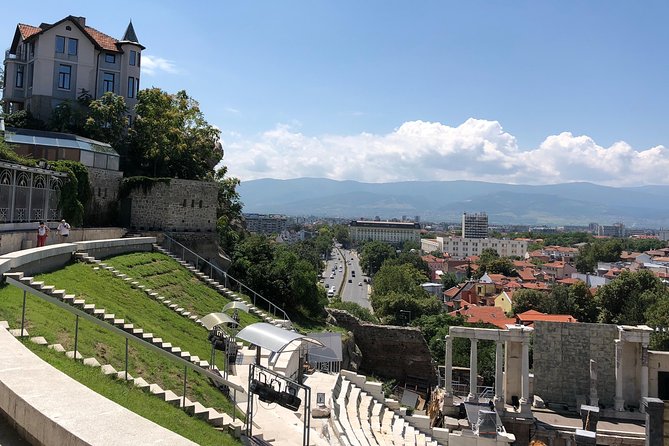
The setting does much of the work. Stone seating curves around the stage, while the elevated position gives the theatre a wider view across the city. You can understand its role as a place for public performance, but you can also see how Roman planners used the hills.
The suggested stop is ten minutes, though that is a minimum for many people. This is the place where I would pause the audio, take in the structure, and let the site speak for itself. One short explanation cannot replace a quiet look around.
The theatre also shows why an audio walk can be better than a simple map. You get the basic historical frame without having to join a fixed group. At the same time, you remain free to stop the narration and explore.
A few more Plovdiv half-days worth a look
- The Oldest European City – Plovdiv with Audio guide
★ 5.0 · 3 reviews
Three museums add depth, but cost extra
The Plovdiv Regional Ethnographic Museum is the next paid stop. It is the second-largest specialized museum of its type in Bulgaria. The suggested time is only five minutes, which is enough to identify it but not enough for a meaningful museum visit.
Admission is not included. If you like cultural museums, treat this as an optional extension rather than a quick tick on the route. You will need to budget both the entry fee and additional time.
The Small Basilica of Philippopolis is another paid archaeological site. It dates from the fifth or sixth century and is listed for about 15 minutes. That makes it one of the more substantial stops on the route.
Its value is clear even from the short description: this is not another general museum, but a focused archaeological site tied to the Christian history of ancient Plovdiv. Since entry is extra, check your budget before you begin. The audio tour’s $15.49 price does not cover this ticket.
The Cultural Center-Museum Trakart is also not included. Its central feature is a 160-square-meter Roman mosaic preserved in place from the third or fourth century.
Trakart also covers ancient glassmaking, with objects showing development from the fifth century BC through the fourth century AD. Other displays include Proto-Thracian ceramic objects and Roman miniature portraits dating from the first century BC to the first century AD.
This is a good stop if you want more than the headline ruins. The museum connects decoration, craft, trade, and daily life across several periods. The planned 15 minutes is again quite short, so consider the audio estimate a guide, not a strict timetable.
Nebet Tepe gives the walk its best outlook
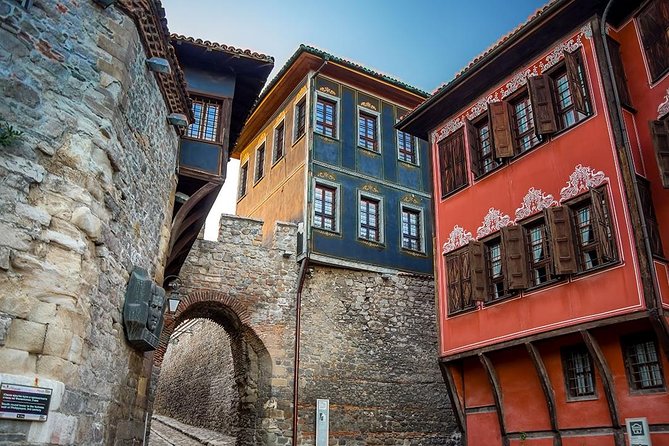
Nebet Tepe is one of Plovdiv’s defining hills and the place where the ancient settlement began. The earliest settlements here date to about 4000 BC, giving the city a much older starting point than the Roman monuments alone suggest.
The walk to the hill adds some physical work. A moderate level of fitness is recommended, and that is sensible advice for a route that moves through an old hillside quarter. You should expect uneven surfaces and climbs typical of a historic hilltop area, though the supplied details do not specify exact accessibility conditions.
Nebet Tepe is valuable for two reasons. First, it gives you the earliest chapter in the city’s story. Second, it helps you read Plovdiv’s geography. From higher ground, the relationship between the Old Town, the Roman sites, and the modern city becomes easier to grasp.
Allow about 15 minutes, but do not rush this stop. It is one of the places where pausing the audio and looking around pays off.
Hisar Kapia and the oldest church in the route
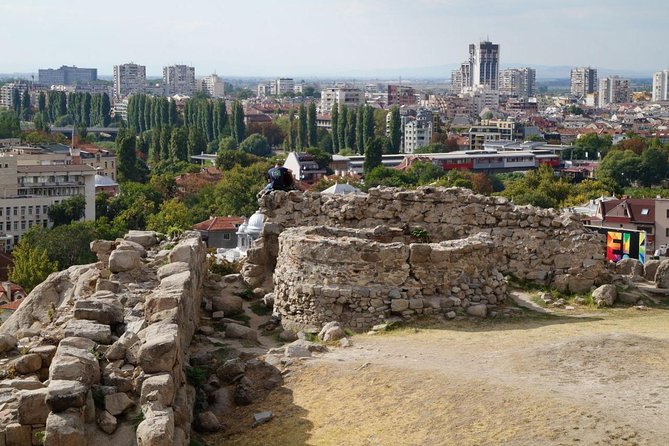
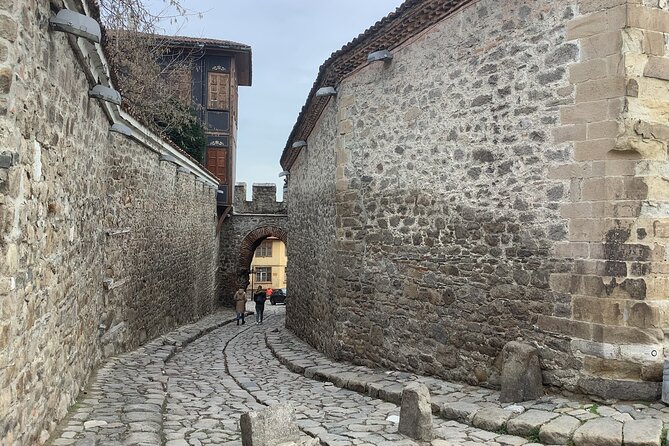
Hisar Kapia means Castle Gate in Turkish. This medieval gate is one of Plovdiv’s best-known sights and a natural Old Town photo stop.
The visit takes about five minutes. Its importance is not only visual. The gate helps you picture the fortified medieval city, when movement through the settlement was controlled by entrances rather than open streets.
The route then reaches Saints Constantine and Helena, considered one of Plovdiv’s oldest churches. It was built in 337 on the site of an ancient pagan temple in the acropolis on one of the fortified hills.
That detail neatly captures Plovdiv’s layered character. A pagan temple, a fortified hill, and an early Christian church occupy the same broad setting. You are not just moving from one attraction to another. You are following changes in belief and power across the same ground.
The suggested stop is ten minutes, and admission is free according to the supplied tour details.
What the $15.49 price really buys you
At $15.49 per person, this is a reasonable purchase if you want an English explanation and a planned route without paying for a private in-person guide. You are paying for structure, narration, and flexibility rather than personal conversation.
The value improves if you visit even one of the included free sights at a thoughtful pace and use the route to find the others. The Roman Theatre, Ancient Stadium, Djumaya Mosque, Hisar Kapia, Nebet Tepe, and Saints Constantine and Helena all add substance without separate entry charges according to the tour details.
You should also remember the three extra admission costs. The Ethnographic Museum, Small Basilica, and Trakart are not included. The 15% restaurant discount may offset part of your lunch or dinner bill, but the restaurant is not named, so I would treat that as a bonus rather than part of the core value.
The biggest money-saving feature is flexibility. You can spread the route over the 72-hour access period instead of paying for several separate sightseeing experiences. That matters if you want to visit museums rather than simply pass their doors.
The map is the weak link
The audio is designed to mark out the route, and the walking order is easy to understand. The weak point is the map on the phone. It can require switching back and forth between the map and audio, and the PDF may be unclear when enlarged.
Bright sunlight can make any phone map harder to read. Bring a charged phone, download what you need before setting out if that option is available to you, and pause rather than walking while trying to follow a small screen.
The map issue does not ruin the experience, but it does make this less effortless than a guided walk with a person physically pointing out the next turn. If navigation stresses you, allow extra time at the start to get your bearings.
Who should book this Plovdiv walk?
I would choose this tour if you want to explore independently, prefer English narration, and like mixing major sights with smaller historical stops. It suits couples, families with older children, and private groups who do not want to match a guide’s speed.
It is also a good fit for a first visit to Plovdiv because the route covers several eras in one circuit: ancient Thracian settlement, Roman Philippopolis, medieval fortifications, Ottoman rule, Bulgarian religious history, and 19th-century Revival architecture.
I would be more cautious if you want a fully guided conversation, a printed map, or a tour with all museum admissions included. You will need to manage your own timing, phone, route, and extra tickets.
The activity is a private experience for your group only, but it is self-guided, so do not expect a guide to meet you at the stadium. Confirmation is provided at booking. Free cancellation is available up to 24 hours before the local start time; cancellations or changes inside that window are not accepted.
Should you book the Old Town audio tour?
Book it if you want a flexible introduction to Plovdiv’s layered past and are comfortable using your phone as both map and guide. The Roman Theatre, Nebet Tepe, Ancient Stadium, and Old Town houses give the route plenty of substance, while the 72-hour access lets you slow down for museums.
Skip it if you want a live guide, a printed route, or one fixed price covering every entrance. For independent walkers who value control over pace, the $15.49 cost is fair, especially with free major stops and a 15% restaurant discount.
FAQ
How long does the Plovdiv Old Town audio tour take?
The route is designed to take about 2 to 3 hours. You may need longer if you enter the museums or spend extra time at the Ancient Theatre and Nebet Tepe.
Where does the tour begin?
It begins at the Ancient Stadium of Philippopolis on ul. Hristo G. Danov in central Plovdiv.
Where does the tour end?
The activity ends back at the meeting point, at the Ancient Stadium of Philippopolis.
What language is the audio guide offered in?
The audio guide is offered in English.
Are museum admission fees included?
No. Admission to the Ethnographic Museum, Small Basilica of Philippopolis, and Cultural Center-Museum Trakart is not included. The supplied details list admission as free for the other stops.
How long can I access the audio guide?
The provider information says access has been extended to 72 hours, giving you time to split the route across more than one day.
Can I cancel for a full refund?
Yes, if you cancel at least 24 hours before the experience start time. Cancellations or changes made less than 24 hours in advance are not accepted for a refund.
New around Plovdiv
- Roman Plovdiv, Self-Guided Tour and Urban Quest Game★ 5.0 · 6 reviews
- Private Buggy Experience All Seasons in Pamporovo★ 5.0 · 3 reviews
- Veliko Tarnovo – Arbanassi – Shipka Memorial Church – private tour from Plovdiv★ 4.5 · 6 reviews
- Hiking to Eagle’s Eye and Devil’s Throat Cave★ 5.0 · 4 reviews
- Plovdiv Roman Sights Self-Guided★ 4.5 · 3 reviews
- Private Cascades Waterfall Horseback Riding Tour from Smolyan★ 5.0 · 4 reviews
- Private Plovdiv Day Trip from Sofia★ 4.5 · 6 reviews
- Half-Day of Horseback Adventure with Wine Tasting★ 5.0 · 4 reviews
Self-Guided Tours, compared.
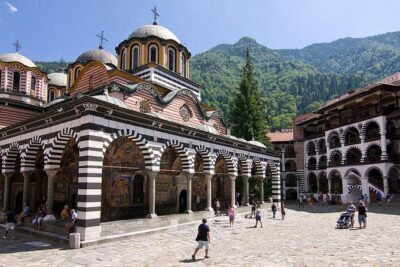
Rila Monastery and 7 Rila Lakes Self-Guided Shared Trip from Sofia
Read our review →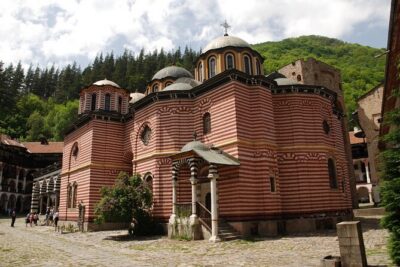
Rila Monastery and Boyana Church Self-Guided Day Trip from Sofia
Read our review →
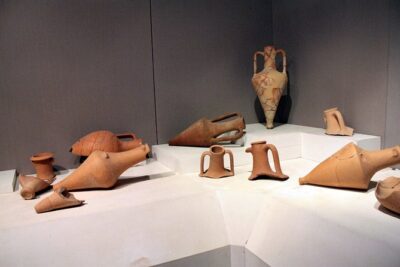
Self-guided tour in Varna Archaeological Museum + ticket
Read our review →
Discover Veliko Tarnovo at Your Pace: Private or Self-guided tour
Read our review →

Browse the lists this tour appears in