
Reviewed · MUSEUMS
Self-guided tour in Varna Archaeological Museum + ticket
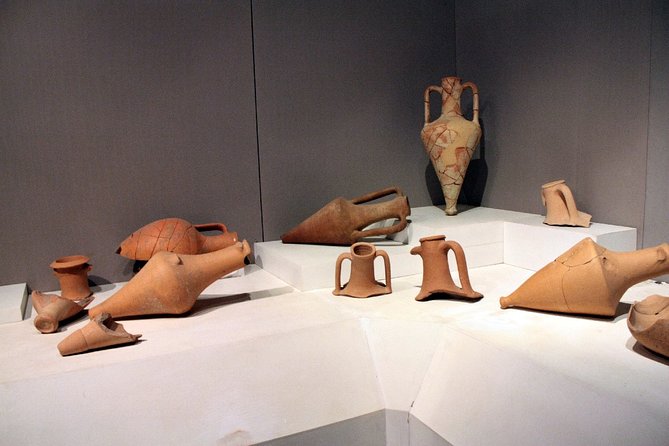
Varna’s Archaeological Museum gives you a cool, quiet break from the beach, with ancient jewelry, surgical tools, and tombstones arranged inside a former girls’ high school. The self-guided format lets you set your own pace rather than follow a guide through every room.
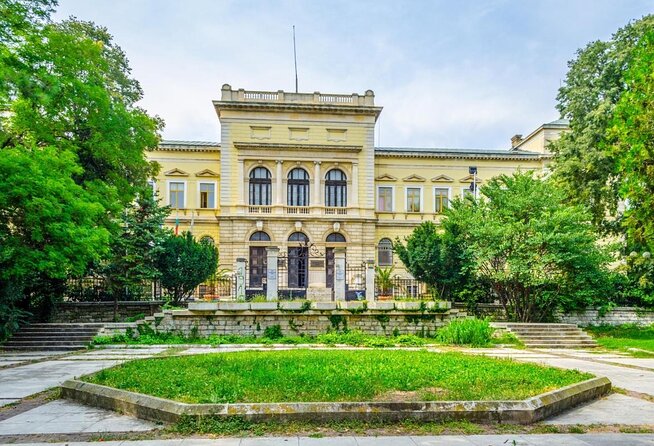
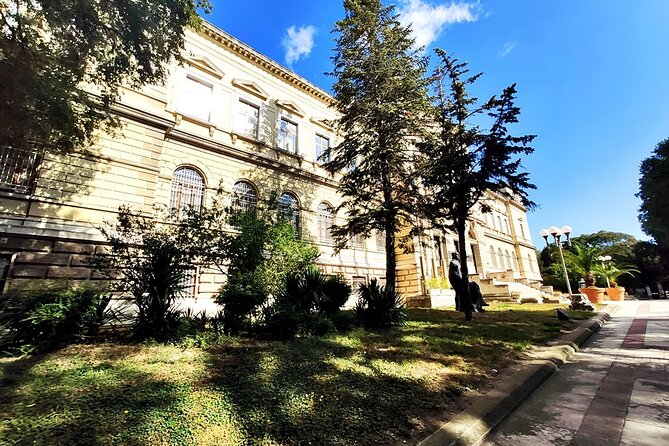
I like the chance to trace Varna and northeastern Bulgaria through Hellenistic, Roman, and medieval objects. I also like the grand old building itself, designed by Petko Momchilov in a New Renaissance style, with a square plan, inner courtyard, long corridors, and painted sections.
The main caution is the ticket process. You receive a second voucher for entry, not necessarily the admission ticket itself, and one booking problem led to a visitor arriving without usable access. Check your email and spam folder before you go, and confirm holiday opening dates.
Key points to know before you go
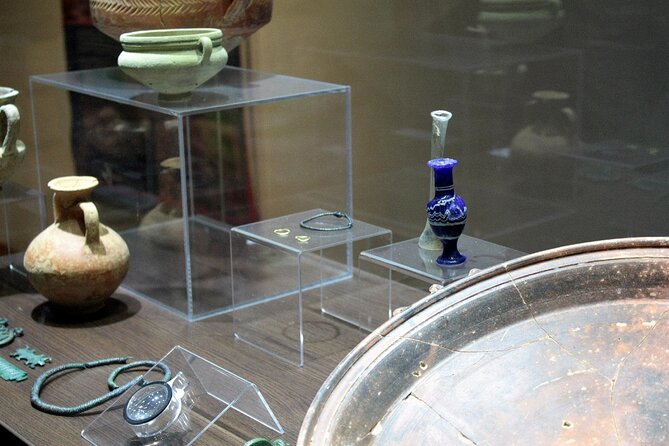
- Ancient objects beyond the beach: See tombstones, medical instruments, jewelry, and other finds linked to the Hellenistic, Roman, and medieval periods.
- A self-guided visit: You explore independently in English, with no full tour commentary included.
- A former girls’ high school: The 1892 to 1898 building is part of the experience, with New Renaissance details and a central courtyard.
- Plan for 2 to 3 hours: That gives you time to read displays and examine the building without rushing.
- Check the access voucher: The first confirmation may not be the usable museum ticket. Look for the additional voucher.
- Avoid national holiday surprises: The museum was closed for three days around Bulgarian National Holiday on one booking date.
Why this museum is worth a beach break
Varna is easy to associate with sand, sea, and summer crowds. The Archaeological Museum gives you a different view of the city, one rooted in objects rather than resort life. You can step indoors and spend a few hours with the people, tools, burial customs, and decorative work that shaped the region across several eras.
The collection covers Hellenistic, Roman, and medieval Bulgaria, so the visit is not limited to one period. You might begin with a carved tombstone, move on to medical tools that suggest the practical side of ancient life, then pause over jewelry that shows how people marked status and personal style.
This is not a live, guide-led tour. You read and examine the displays on your own, in English. That suits you if you like to linger over one object, move quickly through a room, or divide your attention between children and the exhibits.
The museum also helps put Varna’s location into context. The city and its surrounding region have long been tied to movement, trade, settlement, and changing political powers. The objects make those broad themes more concrete. A tool is easier to understand than a date on a wall, and a tombstone can give you a more personal glimpse of the past than a general timeline.
More museums and galleries in Varna:
- Admission Ticket to the Museum of Illusions in Sofia
★ 5.0 · 659 reviews - Admission Ticket to Illusions in Museum in Veliko Turnovo
★ 5.0 · 35 reviews - Buzludzha Monument and the Museum of Socialist Art
★ 5.0 · 25 reviews
Inside Petko Momchilov’s former school
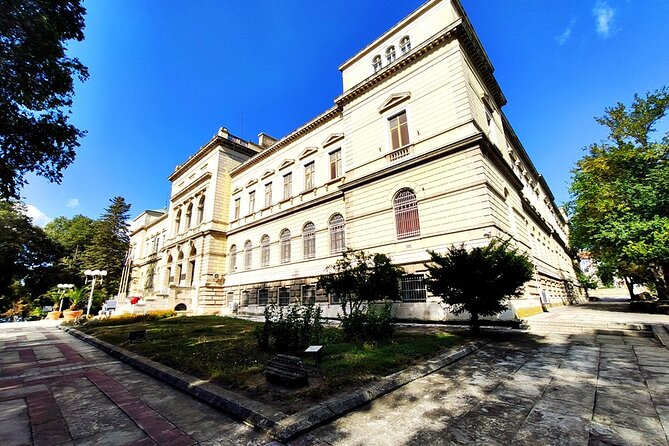
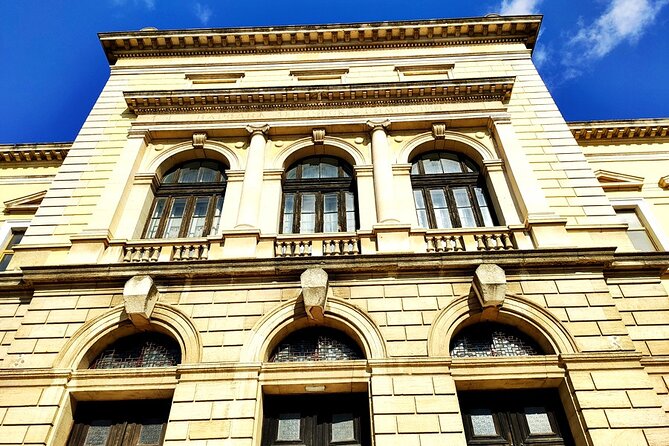
Before you reach the displays, take a moment to look at the building. It was built between 1892 and 1898 as a Girls High School, based on a design by Bulgarian architect Petko Momchilov. Its New Renaissance style gives the museum a formal, academic character that fits its purpose.
The building has a basement and two upper floors. It nearly forms a complete square around a spacious inner yard, and a continuous corridor leads to the exhibition rooms. Some rooms and corridors include wall paintings, so the architecture is not simply a container for the collection.
I like this arrangement because it gives the visit a clear rhythm. You move through a real historic institution, not a modern hall with identical galleries. The corridors help connect the rooms, while the courtyard offers a visual pause between groups of exhibits.
For families, that variety matters. Children may not want to read every panel, but the building gives them something else to notice: the corridors, the open central space, and the change from room to room. Adults can focus on the objects without turning the visit into a long lecture.
The historic setting does have a practical tradeoff. A large old building can require more walking than a compact gallery, and the available information does not promise a lift or detailed accessibility arrangements. If mobility is a concern, contact the provider before booking rather than assuming every area will be easy to reach.
What you will see in 2 to 3 hours
The suggested visit lasts about two to three hours. That is a sensible window for a self-guided museum visit, especially if you want to read the English text and give the children time to look at the more striking objects.
Start with an orientation walk through the building. Notice how the rooms connect, then decide how closely you want to follow the museum’s sequence. Since you are not tied to a guide, you can return to an object that catches your eye or skip a section that does not hold your attention.
The displays include ancient tombstones, which bring names, roles, and burial customs into the collection. They can be especially useful for visitors who find ordinary household objects hard to place. A carved stone often gives you clues about how people presented themselves and remembered the dead.
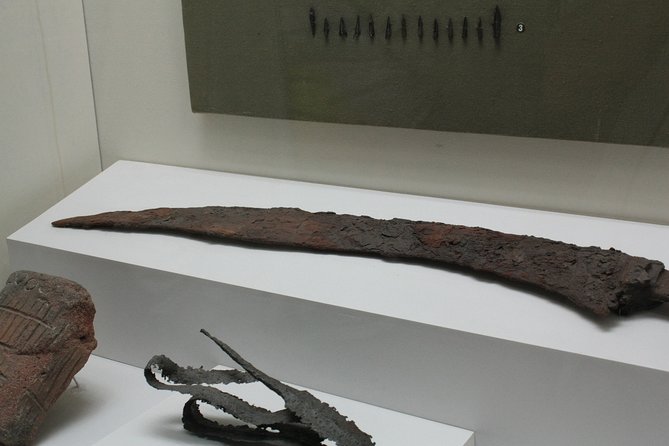
The surgical tools offer another useful angle. They turn ancient medicine from an abstract subject into something physical and precise. You can look at the design of the instruments and consider what they reveal about practical knowledge in the region.
Jewelry adds a more personal note. It is easy to focus only on politics and warfare in an archaeological museum, but ornaments show taste, wealth, identity, and daily habits. These pieces can also help younger visitors connect with the collection, since their purpose is more immediately familiar.
The museum’s historical range means you should not expect every room to feel alike. Hellenistic, Roman, and medieval objects belong to different periods and social settings. The self-guided approach works best if you accept that the experience is about making connections at your own pace, not receiving a single polished story from a guide.
The story behind Varna’s archaeological collection
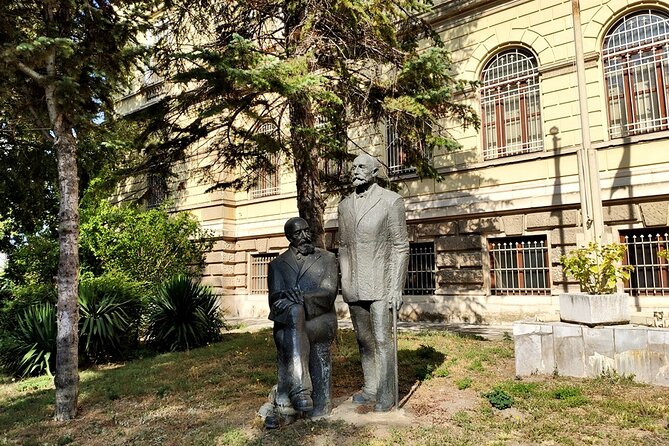
The museum’s development is closely tied to Herman and Karel Škorpil, two Czech brothers who came to Bulgaria after the country’s Liberation and settled permanently in Varna in 1894. Their work helped support education and cultural study in the region.
On December 12, 1901, socially active citizens and teachers founded the Varna Archaeological Society. The society became a driving force in the study of Varna, the surrounding region, and northeastern Bulgaria. Creating an archaeological museum was one of its main aims.
This background adds meaning to the visit. You are not simply entering a collection of old objects. You are seeing the result of a long local effort to preserve and study the area’s past. The museum’s story also explains why the collection matters beyond Varna itself.
I would keep this context in mind as you walk through the rooms. The museum represents both the ancient periods displayed in its cases and the modern Bulgarian interest in protecting local history. The building, the archaeological society, and the objects belong to different chapters of the same story.
More self-guided routes in Varna:
- Rila Monastery and 7 Rila Lakes Self-Guided Shared Trip from Sofia
★ 5.0 · 280 reviews - Rila Monastery and Boyana Church Self-Guided Day Trip from Sofia
★ 5.0 · 41 reviews - Self Guided Tour Experience in Rila Monastery
★ 3.0 · 15 reviews - Discover Veliko Tarnovo at Your Pace: Private or Self-guided tour
★ 4.0 · 11 reviews
Is the $22.48 price good value?
At $22.48 per person, the experience is not the cheapest way to enter a museum. A self-guided visit with no live commentary needs to offer more than a simple walk-up admission to feel worthwhile.
The value comes from the pre-arranged access and the amount of time you can spend inside. If you want a quiet, independent visit and would rather have entry organized before your day in Varna, the price may be reasonable for you. Families may also appreciate having a planned indoor activity that fills two or three hours.
Still, be clear about what you are buying. This is not a private tour, and it does not promise a personal guide. You should expect to read the museum’s information and make your own way through the exhibits.
One complaint described paying much more than the expected local admission cost and receiving little beyond directions to read the English text on the walls. That concern is important. If your main goal is simply the lowest admission price, compare the booking cost with the museum’s direct entry price before committing.
The current supplied rating is 3.7 out of 5 from 14 reviews, which points to a mixed experience rather than a clear bargain. The museum itself can be worthwhile, but the booking service and ticket delivery deserve careful attention.
Ticket delivery needs extra care
The access instructions say that the first confirmation is not the actual museum ticket. You are supposed to receive a second voucher that gives you access to the museum.
That distinction can easily cause confusion. After booking, check your email carefully, including the spam folder, and look for the additional voucher. Do this before reaching the museum, not while standing at the entrance.
One booking problem involved a visitor who said the entry ticket never arrived. The provider, whose response was signed Hristo, said the ticket had been sent after booking and advised checking email and spam. That exchange suggests the issue may be delivery or confusion between the confirmation and access voucher, but the practical lesson is the same: verify the document in advance.
The provider also said that a guide had been waiting to refund tickets on the spot in another case and had called more than four times. Do not rely on a last-minute phone solution. Save the provider’s contact details and make sure your phone can receive messages if something goes wrong.
Opening hours, holidays, and group size
The stated opening hours are Tuesday through Saturday, 10:00 a.m. to 5:00 p.m. The listed operating period runs from December 31, 2020, through December 7, 2026, though you should confirm the date of your visit when booking.
The museum is not presented as open every day. That matters if you are building a short Varna stay around a beach schedule. A Sunday or Monday plan may not work under the stated hours.
National holidays also require care. One booking was made for September 6, Bulgarian National Holiday, when museums were closed for three days. The museum could not provide the visit on that date. Check both the normal weekly schedule and national holiday closures before choosing your day.
The maximum group size is 15 people, but this is still a self-guided activity. The group limit may help keep the booking small, though it does not mean you will receive a personal explanation from a guide.
The museum is near public transportation, and most people can participate. Children must be accompanied by an adult. Those facts make it a practical option for families and for visitors who do not want to arrange a complicated transfer.
Who will enjoy this visit most?
I would recommend this experience to you if you like museums that combine local history with a historic building. It suits independent visitors who prefer to read, pause, and move on without a fixed tour pace.
It is also a good fit for a family needing a break from hot or crowded beaches. The subjects are varied enough to offer several entry points: jewelry for one person, surgical instruments for another, and the building or tombstones for someone else.
You may be less satisfied if you expect a guide to explain every display or if you judge value only by the lowest possible admission price. The English self-guided format puts more responsibility on you to create the visit.
It is also not ideal for a rushed schedule. Two to three hours is a meaningful part of a day, and the museum deserves more than a quick run through the rooms if you want to understand the range of periods on display.
Should you book the Varna Archaeological Museum ticket?
Book it if you want a planned indoor activity, prefer exploring independently, and value the chance to see Varna’s archaeological collection in a former school building. The combination of tombstones, surgical tools, jewelry, and objects from Hellenistic, Roman, and medieval periods gives the visit useful variety.
I would book only after checking the date, confirming that the museum is open, and locating the second access voucher in your email. If the $22.48 price feels high for self-guided entry, compare it with direct museum admission before paying.
For the right visitor, this is a calm and worthwhile counterpoint to Varna’s beaches. Just treat the ticket details as part of the planning, not as an afterthought.
FAQ
How long does the self-guided museum visit take?
The visit takes approximately 2 to 3 hours.
What language is offered?
The experience is offered in English.
Is this a guided tour?
No. It is a self-guided visit, so you explore the museum independently.
What can I see at the museum?
The collection includes ancient tombstones, surgical tools, jewelry, and material connected with Hellenistic, Roman, and medieval history.
Where does the visit take place?
It takes place at the Varna Archaeological Museum in Varna, Bulgaria.
What are the stated opening hours?
The stated hours are Tuesday through Saturday, from 10:00 a.m. to 5:00 p.m.
Do I receive the museum ticket immediately?
The booking information says you receive a second voucher for museum access. Check your email and spam folder for it after booking.
Can I cancel for a full refund?
Yes. You can cancel at least 24 hours before the experience start time for a full refund. Cancellations made within 24 hours are not refunded, and changes within 24 hours are not accepted.
New around Varna
- Full-Day Private Sightseeing Tour to the North of Varna★ 5.0 · 4 reviews
- Varna Exquisite Wine Tasting★ 5.0 · 5 reviews
- Guided Nessebar Sightseeing Tour with Pick Up★ 5.0 · 6 reviews
- Infinity spa★ 4.5 · 4 reviews
- Private Cape Kaliakra & the Balchik Botanical Gardens from Varna★ 5.0 · 3 reviews
- Superb Jeep Safari from Sunny beach, Nessebar, St. Vlas & Pomorie★ 4.5 · 13 reviews
- The Ultimate Private Varna Walking, Culture & Wine Tasting Tour★ 5.0 · 8 reviews
- Private Varna Gourmet Tour with Superb Wine Tasting★ 4.0 · 8 reviews
Museums, compared.

Admission Ticket to the Museum of Illusions in Sofia
Read our review →
Admission Ticket to Illusions in Museum in Veliko Turnovo
Read our review →Buzludzha Monument and the Museum of Socialist Art
Read our review →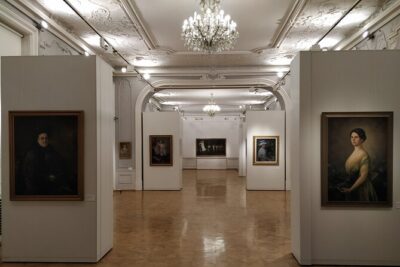
Private Sofia Half Day Tour with Boyana Church and National History Museum
Read our review →
Browse the lists this tour appears in