
Reviewed · COMMUNIST HERITAGE TOURS
Buzludzha Monument and the Museum of Socialist Art
Buzludzha is Bulgaria’s great communist-era oddity: a concrete hilltop building shaped like a flying saucer, reached by a long road through the countryside. This tour pairs it with Sofia’s Museum of Socialist Art, giving you both the official art of the period and its most dramatic monument.
I like the hotel pickup and private vehicle, which turn a remote sight into a manageable day trip. I also like the guides’ flexibility, especially when Maria or Martin adjusts the plan for a museum closure or adds a useful stop. The catch is simple: Buzludzha takes about three hours each way, so this is a full day in the car.
Key points to know before you book
- Buzludzha is a remote mountain monument, not a quick side trip from Sofia.
- The Museum of Socialist Art includes more than 70 sculptures in a 7,500-square-meter park.
- Monday visits replace the museum with Bells Park, built through Bulgaria’s Flag of Peace initiative.
- Maria and Martin have received especially strong praise for clear explanations and flexible guiding.
- The $108.43 price includes pickup, transport, a guide, and attraction admission, but not food or drinks.
- Weather matters at the summit, where rain, snow, and blizzards can affect the visit.
Why Buzludzha is worth the long road from Sofia
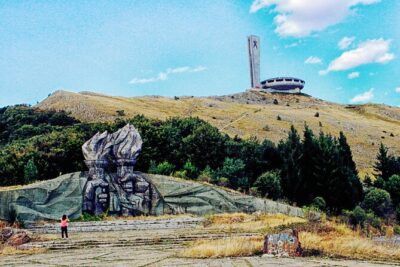
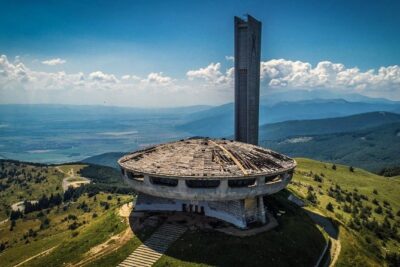
The Buzludzha Monument was completed in 1981 to mark the founding of the Bulgarian Social Democratic movement and celebrate socialism. Its shape is hard to forget: a broad concrete disc perched high on the mountain, with a tall red-star tower beside it.
The building was abandoned after Bulgaria’s communist government fell in 1989. Years of exposure and vandalism have left it weathered and damaged. That is part of its appeal, but also part of the experience. You are not visiting a polished museum with neat signs and a gift shop. You are seeing a huge political symbol after its political purpose has vanished.
That contrast gives the monument its force. It was built to project confidence and permanence. Today, the empty structure and battered surfaces tell a different story. You can look at it as architecture, political history, or a warning about how quickly public symbols can lose their meaning.
The road is a major part of the day. The drive from the first stop to Buzludzha takes roughly three hours, and the complete outing lasts about ten hours. The trip passes through Bulgarian villages and countryside, with the mountain views becoming the reward for your patience.
If you dislike long car journeys, this may feel excessive. If you enjoy unusual buildings, recent European history, and seeing a country beyond its capital, the distance is easier to accept.
More communist-era sights in Sofia:
- Communist Walking Tour of Sofia
★ 5.0 · 690 reviews - Sofia Communist History 2-Hour Tour in a Classic Trabant
★ 5.0 · 45 reviews - Sofia Food & Tasting Tour with Communist-Era Tram Ride
★ 5.0 · 35 reviews
The Museum of Socialist Art in Sofia
The first scheduled stop is the Museum of Socialist Art, reached after pickup from your Sofia accommodation at 9:30 a.m. You spend about an hour here, with admission included.
The museum’s outdoor park contains more than 70 examples of monumental sculpture across 7,500 square meters. These works were made for public spaces during the communist period, when art often served the state as much as it served the artist.
The most striking object is the large five-pointed red star that once crowned the former Party House in central Sofia. Seeing the star displayed on its own changes how you read it. It is no longer directing attention from the top of a government building. It has become an artifact.
I find this stop useful because it gives you a framework for Buzludzha. The mountain monument can seem like an isolated piece of brutalist architecture. The museum shows the wider visual language around it: heroic figures, public sculpture, political symbols, and the scale favored by governments that wanted their message to feel permanent.
An hour is enough for a focused visit, but not enough for a slow study of every work. Your guide can help explain what you are seeing and place the sculptures in the context of Bulgarian state socialism.
The museum is closed on Mondays. On that day, the itinerary changes to Bells Park, also known as the Monument to the Bulgarian-Soviet Friendship or part of the Flag of Peace initiative. The park was created in 1979 through an effort associated with the daughter of Bulgaria’s last communist leader.
Children from countries on both sides of the Iron Curtain met through that project and made bells, many of which are displayed in the park. It offers a different angle on the period. Instead of focusing only on party power and official monuments, it points to cultural exchange and the way international friendship was presented under socialism.
The Monday replacement can also include other stops when conditions or timing require it. A guide has previously substituted Thracian tombs for the closed museum, and another route included the Valley of the Thracian Kings. Those additions are not guaranteed, so treat them as possible adjustments rather than promised stops.
The three-hour drive through central Bulgaria
The distance between Sofia and Buzludzha is the tour’s main practical issue. You spend about three hours driving each way, with the monument visit lasting around an hour. That leaves a good part of the day inside the vehicle.
Still, the road gives you something a short city excursion cannot. You pass through villages and rural areas, and the changing views help connect the monument to the country around it. One guide also used the journey to explain Thracian culture and ancient burial grounds in the Valley of the Thracian Kings.
A stop for food may be arranged during the day. One outing included a meal break at a traditional Bulgarian tavern. Food and drinks are not included in the price, so bring money for those costs and do not assume lunch is covered.
Rain can make the journey feel slower, but it may also make the drive worthwhile if you prefer watching the countryside from a warm vehicle. At the summit, conditions can shift sharply. One visit arrived during heavy snow and a blizzard, while another took place on a dreary rainy day. Wear shoes with a firm sole and bring clothing suitable for mountain weather.
The tour requires a moderate level of physical fitness. You may walk on uneven ground around the monument, and the weather can make the approach harder. The exact condition of the site is part of the point, but it also means this is not the easiest sightseeing stop.
Reaching the Buzludzha Monument
The first sight of Buzludzha is the payoff. The building rises above the mountain like a derelict spacecraft, with a broad circular body and a separate tower marked by a red star.
Construction began in 1974 and finished in 1981. Bulgarian Army units worked on the project, alongside artisans responsible for the large statues and murals. The scale was deliberate. This was not meant to blend into its surroundings. It was built to dominate them.
Inside, the monument has suffered serious damage since its abandonment. Access conditions can vary, and the attraction should not be treated like a fully restored indoor museum. Restoration workers have been present during some visits, and film crews have occasionally used the site, but neither activity is guaranteed.
You may spend your hour examining the exterior, taking in the views, and seeing whatever interior areas are safely available. The guide helps make sense of the building’s purpose and the political system that created it.
The monument is especially rewarding if you care about brutalist architecture. Its concrete forms, huge interior spaces, damaged mosaics, and isolated position create a strange mix of grandeur and decay. Even people who are not architecture enthusiasts can appreciate the sheer scale.
The mountain setting also matters. From the summit, you get wide views over central Bulgaria. On clear days, those views add a natural counterpoint to the hard concrete structure. In poor weather, mist, snow, or rain can make the monument feel even more remote, though visibility may be limited.
Do not expect restoration, polished interpretation, or a conventional attraction experience. You are coming for the building, the setting, and the story of what happened to it.
More museums and galleries in Sofia:
- Admission Ticket to the Museum of Illusions in Sofia
★ 5.0 · 659 reviews - Art Gallery Sightseeing Tour in Sofia
★ 5.0 · 15 reviews - Private Sofia Half Day Tour with Boyana Church and National History Museum
★ 5.0 · 12 reviews - Self-guided Tour in the Museum of Socialist Art
★ 4.0 · 4 reviews
The guides make a long day easier
The strongest part of this tour is the guiding. Maria has been praised for her patience, warmth, and detailed understanding of Bulgarian history. Martin has also been singled out for taking extra care with a solo participant and making the day feel worthwhile even when the booking was small.
That matters here because Buzludzha does not explain itself. Without context, you see a large abandoned structure on a mountain. With a good guide, you can connect it to Bulgarian communism, daily life under the former system, state art, the fall of the government, and the country’s older Thracian past.
The guides also help when the plan changes. A closed museum, rough weather, or an unexpected stop can easily disrupt a rigid itinerary. The best version of this trip is not just a driver taking you to a building. It is a flexible day with someone who can explain why each stop matters.
The tour is offered in English. Group size can vary, with a maximum of 15 people and smaller groups of up to seven organized in some periods. A private option is also available. If you prefer asking plenty of questions, a small group or private departure will suit you better.
Solo bookings may still operate. One person took the tour alone, and the trip went ahead with individual attention from the guide. That is useful to know if you are traveling independently and worry that a small booking could be canceled.
Is $108.43 good value?
At $108.43 per person, this is not the cheapest way to see Buzludzha. It is also not a simple entrance ticket. The cost includes hotel pickup and drop-off in Sofia, private-vehicle transport, a professional guide, local taxes, and admission to the included attractions.
The transport is the key value. Buzludzha is far from Sofia, and reaching it independently would require arranging a long drive and dealing with the mountain route yourself. You also avoid the problem of finding a second way back after spending time at a remote site.
The guide adds value if you want more than photographs. Socialist-era monuments can be difficult to read without background, and the drive provides time for questions about Bulgaria, communism, ancient Thrace, and local life.
The price makes less sense if you mainly want a quick look at the monument or would rather spend the day in Sofia. You are paying for a full-day outing, not just a one-hour visit. Food and drinks cost extra, so add that to your budget.
For a remote attraction with transport, guiding, and admission handled, I consider the price reasonable for the right audience. The value depends less on the number of sights than on your interest in the subject.
Who should book this day trip?
I would choose this tour if you have a strong interest in brutalist architecture, communist-era Europe, political symbols, or unusual places that are difficult to reach without a car.
It also suits anyone who wants to see more of Bulgaria than Sofia. The route through villages, mountain country, and possible Thracian sites gives the day a broader purpose. You are not simply visiting one abandoned building and returning.
History fans should enjoy the combination of modern political history and ancient culture. The communist material at the museum and Buzludzha is balanced by the possible connection to Thracian burial sites and the Valley of the Thracian Kings.
I would hesitate if you want a relaxed day with little time in the car. The three-hour drive each way is not a minor detail. You should also think twice if bad weather would spoil your day, since the tour depends on suitable conditions and the mountain can be snowy or stormy.
Children must be accompanied by an adult. The moderate fitness requirement makes this a better fit for people comfortable walking around an exposed, uneven monument site.
Practical details for planning the day
Pickup is offered from your accommodation in Sofia, with the day beginning at about 9:30 a.m. Round-trip transport is by private vehicle, and local taxes, guiding, and attraction admission are included.
Bring money for food and drinks. A meal stop may be arranged, but lunch is not part of the price. Comfortable walking shoes and layers are sensible, particularly because conditions at Buzludzha can be much colder than in Sofia.
The tour is confirmed at booking. Free cancellation is available up to 24 hours before the start time. Changes made inside that period are not accepted, and poor weather may lead to a different date or a full refund.
My verdict on the Buzludzha tour
Book it if Buzludzha is high on your Bulgaria list and you want the history explained rather than simply photographed. The combination of the Socialist Art Museum, a flexible English-speaking guide, hotel transport, and the mountain monument makes the long day worthwhile for the right person.
Skip it if you dislike extended drives or want restored interiors and polished visitor facilities. This is a demanding outing, but it offers something rare: a direct look at Bulgaria’s communist past, set against mountain scenery and the remains of a building that once aimed to last forever.
FAQ
How long is the Buzludzha tour from Sofia?
The experience lasts approximately 10 hours. The drive to Buzludzha takes about three hours, followed by roughly three hours back to Sofia, with time for the museum or Monday alternative and the monument visit.
What time does hotel pickup begin?
Pickup from your Sofia accommodation is scheduled for 9:30 a.m.
Is transportation included?
Yes. Hotel pickup and drop-off, transport by private vehicle, local taxes, and a professional guide are included.
Is admission included?
Admission to the Museum of Socialist Art is included. The Buzludzha Monument stop has no separate admission charge listed. On Mondays, the museum visit is replaced by Bells Park or another suitable stop.
What happens if I book on a Monday?
The Museum of Socialist Art is closed on Mondays, so the tour replaces it with Bells Park. Other adjustments, such as a visit to Thracian tombs, may also be made depending on the route and conditions.
Is food included?
No. Food and drinks are not included. The day may include a stop where you can buy a meal, including a traditional Bulgarian tavern on some routes.
Is the tour suitable for children?
Children must be accompanied by an adult. The tour also recommends a moderate level of physical fitness.
Can I cancel the tour for a refund?
You can cancel at least 24 hours before the experience starts for a full refund. Cancellations or changes made less than 24 hours in advance are not accepted, and poor weather may result in a new date or a full refund.
New around Sofia
- Sofia Hidden Gems: Small-Group Walking Tour with Tram Ride★ 5.0 · 7 reviews
- Private Winter Day Trip to the Rila Mountain★ 4.5 · 3 reviews
- Veliko Tarnovo and Arbanassi Small-Group Day Trip from Sofia★ 4.5 · 13 reviews
- Via Ferrata Adventure on Kuklata peak 2257 m in Rila Mountain★ 5.0 · 8 reviews
- Unique experience to sleep in Rila Monastery★ 5.0 · 6 reviews
- Tour to Koprivshtitsa and the Buzludzha monument incl the Seuthes Thracian Tomb★ 3.5 · 3 reviews
- Catacomb Tour in Sofia guided by a Local★ 4.5 · 3 reviews
- Full day tour to Plovdiv with lunch★ 4.5 · 12 reviews
Communist Heritage Tours, compared.
Sofia Food & Tasting Tour with Communist-Era Tram Ride
Read our review →
A Day trip to the Thracian Kings, The Valley of Roses & Buzludzha
Read our review →
Explore Bulgaria’s COMMUNISM Era–Todor Zhivkov DayTrip from Sofia
Read our review →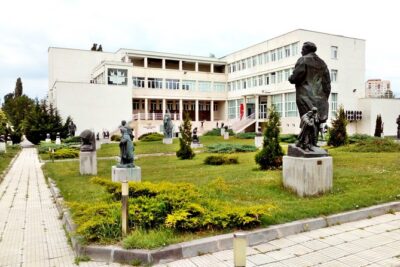
Symbol of the Communism Buzludzha monument and the Rose valley
Read our review →Browse the lists this tour appears in